


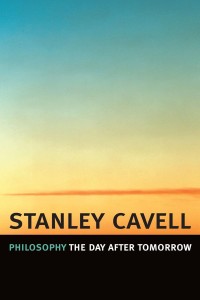
Philosophy the Day after Tomorrow


 (0 vote)
Average rating:
| 0 | rating |  = We can do without = We can do without |
| 0 | rating |  = Good book = Good book |
| 0 | rating |  = Excellent book = Excellent book |
| 0 | rating |  = Unique / a reference = Unique / a reference |
Your rating: -
Book Presentation:
Nietzsche characterized the philosopher as the man of tomorrow and the day after tomorrow--a description befitting Stanley Cavell, with his longtime interest in freedom in the face of an uncertain future. This interest, particularly in the role of language in freedom of the will, is fully engaged in this volume, a collection of retrospective and forward-thinking essays on performative language and on performances in which the question of freedom is the underlying concern.
Seeking for philosophy the same spirit and assurance conveyed by an artist like Fred Astaire, Cavell presents essays that explore the meaning of grace and gesture in film and on stage, in language and in life. Cavell's range is broad--from Astaire to Shakespeare's soulful Cordelia. He also analyzes filmic gestures that bespeak racial stereotypes, opening a key topic that runs through the book: What is the nature of praise? The theme of aesthetic judgment, viewed in the light of "passionate utterance," is everywhere evident in Cavell's effort to provoke a renaissance in American thought. Critical to such a rebirth is a recognition of the centrality of the "ordinary" to American life. Here Cavell, who has alluded to Thoreau throughout, takes up the quintessential American philosopher directly, and in relation to Heidegger; he also returns to his great philosophical love, Wittgenstein. His collection of essays ends, appropriately enough, with an essay on collecting.
About the Author:
Stanley Cavell is Walter M. Cabot Professor, Emeritus, of Aesthetics and the General Theory of Value, Harvard University.
Press Reviews:
One of our most imaginative philosophers, Cavell can always be counted upon to provoke his readers to join him as he soars to dizzying new philosophical heights. With his characteristic aplomb, he ranges over the thoughts of his favorite philosophers, from Nietzsche and Wittgenstein to Heidegger and J. L. Austin, weaving them seamlessly into colorful new patterns with the performative gestures of figures as diverse as Fred Astaire, Shakespeare, Henry James, Jane Austen, George Eliot, and his other favorites, Emerson and Thoreau. Cavell examines themes ranging from the role of the ordinary in philosophy and the intellectual isolation of contemporary American philosophy to the nature and place of skepticism in literature and philosophy...Very few philosopher's demonstrate Cavell's knack for connecting literary and cinematic texts with philosophical writings. (Henry L. Carrigan Jr. Library Journal 2005-02-01)
What has Wittgenstein or Heidegger got to do with Fred Astaire? More than a little, Cavell argues in one of the essays in this new collection, which as a whole demonstrates his nuanced philosophical and intellectual engagement with culture in general, and popular culture in particular. (London Review of Books 2005-08-18)
Stanley Cavell has been a major figure not only as an academic philosopher at Harvard, but also as an educator to those of us who would read modern philosophy if only it were readable. He has a seductively conversational tone, and I am an addict of his essays. A new volume, Philosophy the Day After Tomorrow, does not disappoint. Who but Cavell could begin an essay with Nietsche's Birth of Tragedy and end it with an analysis of Fred Astaire? There are good thoughts on Shakespeare, Henry James, Wittgenstein and, of course, Heidegger. Cavell is one of Heidegger's most intelligible interpreters. (A. N. Wilson Times Literary Supplement 2005-12-02)
Stanley Cavell is widely regarded as one of the most innovative and independent contemporary American philosophers writing today...Cavell's newest book Philosophy the Day after Tomorrow comprises his most recent thinking on topics pertaining to philosophy, literature and film. A collection of ten essays, the book's topics span over the whole range of questions that have at some time or other preoccupied this philosopher's interest...Cavell never disappoints to surprise the reader with his insights. An astute reader and interpreter of works of art, he is showing an acute sensibility that is capable of unearthing new twists and turns in the canonic interpretations of classical and modern works of art (or the supposedly mundane works of the movie world). Only a philosopher such as Cavell could be brave enough to dig out hidden philosophical propositions out of a short sequence of a dancing routine by Fred Astaire. (Harry Witzthum Metapsychology 2005-12-15)
See the publisher website: Belknap Press
> From the same author:
> On a related topic:
Thinking Film (2023)
Philosophy at the Movies
Dir. Richard Kearney and M. E. Littlejohn
Subject: Theory
The Thought of Stanley Cavell and Cinema (2022)
Turning Anew to the Ontology of Film a Half-Century after The World Viewed
Dir. David LaRocca
Subject: Theory

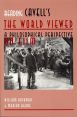
Reading Cavell's the World Viewed (2000)
A Philosophical Perspective on Film
by Marian Keane and William Rothman
Subject: Theory
 Back
Back

