


Citizen Hollywood
How the Collaboration between LA and DC Revolutionized American Politics

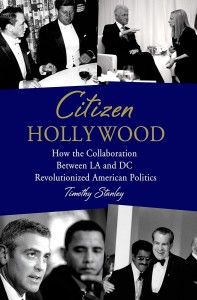

 (0 vote)
Average rating:
| 0 | rating |  = We can do without = We can do without |
| 0 | rating |  = Good book = Good book |
| 0 | rating |  = Excellent book = Excellent book |
| 0 | rating |  = Unique / a reference = Unique / a reference |
Your rating: -
Book Presentation:
To most Americans, Hollywood activism consists of self-obsessed movie stars promoting their pet causes, whether defending marijuana legalization or Second Amendment rights. There's some truth in that stereotype, and in this book you'll find the close personal friends of Fidel Castro, the wannabe cowboys, and the ever-ubiquitous Barbra Streisand. But Citizen Hollywood makes a far more serious case--that Hollywood's influence in Washington runs deeper and affects the country's government more than most of us imagine.
Celebrity activism exerts a subtle power over the American political process, and that pressure is nothing new. Through money, networking, and image making, the movie industry has shaped the way that politics works for nearly a century. It has helped to forge a culture that is obsessed with celebrity and spectacle.
In return, politicians have become part of the fabric of Hollywood society and cater to the wishes of their new-found friends and fund-raisers.
Using original archival research and exclusive interviews with stars, directors, producers, and politicians from both parties, Timothy Stanley's Citizen Hollywood shows that the only way to understand the image-obsessed, volatile politics of modern America is to understand the hidden history of Hollywood's influence on Washington.
About the Author:
TIMOTHY STANLEY graduated with a Ph.D. in history from Cambridge University and has spent time as a research fellow at Harvard and Oxford. The author of two books, Kennedy vs. Carter and The Crusader, and co-editor of Making Sense of American Liberalism, he has written political commentary for the National Review Online, The Atlantic, Dissent Magazine, the New Republic, and CNN.com, and is a columnist for The Daily Telegraph.
Press Reviews:
"Citizen Hollywood is a very good read and digs quite deep, with sharp cultural and political analysis and relevant interviews. Stanley provides texture and depth on the nexus of Hollywood entertainment and Washington politics, both conservative and liberal, and offers a sobering critique of the president as 'leading man.'" ―Brian Neve, author of Film and Politics in America
"Tempered by a soupçon of cynicism and delivered with more than a dollop of snark, Stanley's inquiry reveals both how our politicians have become carefully packaged products and the depth of Hollywood's impact upon democracy." ―Booklist
"Smart and far-ranging.... Stanley's book is witty and entertaining, and does a thorough job of illustrating the ways in which Hollywood works Washington, the ways Washington works Hollywood, and the ways both are subject to the surprisingly unpredictable whims of the American public. ... One of the strengths of Stanley's book is that he takes a critical and unconvinced look at the current vogue among conservatives to blame the 'liberal media' or 'Hollywood values' for the things that plauge us." ―National Review
See the publisher website: Thomas Dunne
> On a related topic:

Fredric Jameson and Film Theory (2022)
Marxism, Allegory, and Geopolitics in World Cinema
Dir. Keith B. Wagner, Jeremi Szaniawski and Michael Cramer
Subject: Theory

Walls without Cinema (2022)
State Security and Subjective Embodiment in Twenty-First-Century US Filmmaking
Subject: Sociology
Hollywood Diplomacy (2020)
Film Regulation, Foreign Relations, and East Asian Representations
Subject: Sociology
Civil Servants on the Silver Screen (2019)
Hollywood's Depiction of Government and Bureaucrats
Subject: Sociology
Cinema and the Wealth of Nations (2017)
Media, Capital, and the Liberal World System
Subject: Sociology

Politics, Hollywood Style (2017)
American Politics in Film from Mr. Smith to Selma
by John Heyrman
Subject: Sociology
 Back
Back

