

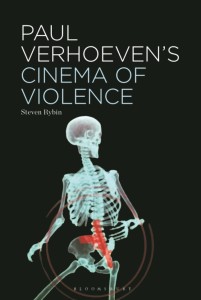
Paul Verhoeven's Cinema of Violence
de Steven Rybin


 (0 vote)
Moyenne des votes :
| 0 | vote |  = On peut s'en passer = On peut s'en passer |
| 0 | vote |  = Bon livre = Bon livre |
| 0 | vote |  = Excellent livre = Excellent livre |
| 0 | vote |  = Unique / une référence = Unique / une référence |
Votre vote : -
Description de l'ouvrage:
The first English-language critical study of the films of Paul Verhoeven, the Dutch director of provocative and vividly imagined films such as Turkish Delight (1973), Robocop (1987), Basic Instinct (1992), Showgirls (1995), Starship Troopers (1997), Black Book (2006), and Elle (2016). Where some audiences find in Paul Verhoeven little more than empty provocation (or, even worse, immoral scandal), Paul Verhoeven’s Cinema of Violence takes a more careful and nuanced look at this director’s body of work and its penchant for violence of various kinds. Exploring the breadth of this director’s career, this book encompasses everything from his early short works as a student filmmaker in the 1960s to the most recently completed Benedetta (2021), a French-language film based on Judith C. Brown’s 1986 academic volume Immodest Acts: The Life of a Lesbian Nun in Renaissance Italy. This volume studies a wide range of themes and ideas across Verhoeven’s work, including his cinematic approach to violence, his adaptation of literature, his work in notable genres such as science fiction and the war film, his work with actors and direction of performances, his provocative treatment and representation of sexuality and gender, as well as his intense and frequently baroque cinematic style. It also traces in his work a career-long interest in religion: although an avowed atheist, Verhoeven has been obsessed with the image of Jesus in nearly all his films, a theme in his cinema that dovetails with his 2011 academic study Jesus of Nazareth. Through this comprehensive approach, Paul Verhoeven’s Cinema of Violence offers a passionate, nuanced, and comprehensive critical look at the cinematic output of one of the Netherlands’ – and Hollywood’s – most vital contemporary filmmakers.
À propos de l'auteur :
Steven Rybin is Associate Professor of Film Studies at Minnesota State University, Mankato, USA. He is the author of Geraldine Chaplin: The Gift of Film Performance (2020), Gestures of Love: Romancing Performance in Classical Hollywood Cinema (2017), and Michael Mann: Crime Auteur (2013), among other books.
Revue de Presse:
"A wide-ranging, immersive study of a filmmaker who has long eluded sustained investigation despite-as Rybin explores-compelling particularities of style, approach, and subject matter. This book provides the most thoroughgoing and definitive study of Verhoeven's oeuvre to date. Rybin's keen yet nuanced and exploratory analyses allow us to contemplate new ways of seeing and thinking about these films, challenging well-worn critical assumptions." ―Dominic Lennard, Senior Teaching Fellow, University of Tasmania, Australia, and author of Brute Force: Animal Horror Movies (2019)
Voir le site internet de l'éditeur Bloomsbury Academic
Voir la filmographie complète de Paul Verhoeven sur le site IMDB ...
> Du même auteur :


Stellar Transformations (2022)
Movie Stars of the 2010s
Dir. Steven Rybin
Sujet : On Films > Per period

Geraldine Chaplin (2020)
The Gift of Film Performance
de Steven Rybin
Sujet : Actor > Geraldine Chaplin
Gestures of Love (2018)
Romancing Performance in Classical Hollywood Cinema
de Steven Rybin
Sujet : Genre > Romantic films
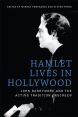
Hamlet Lives in Hollywood (2017)
John Barrymore and the Acting Tradition Onscreen
Dir. Murray Pomerance et Steven Rybin
Sujet : Actor > John Barrymore

The Cinema of Hal Hartley (2016)
Flirting with Formalism
Dir. Steven Rybin
Sujet : Director > Hal Hartley

Lonely Places, Dangerous Ground (2015)
Nicholas Ray in American Cinema
Dir. Steven Rybin et Will Scheibel
Sujet : Director > Nicholas Ray
> Sur un thème proche :



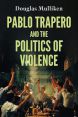
Pablo Trapero and the Politics of Violence (2023)
Sujet : Director > Pablo Trapero

Violence in the Films of Alfred Hitchcock (2017)
A Study in Mimesis
Sujet : Director > Alfred Hitchcock
Savage Cinema (1998)
Sam Peckinpah and the Rise of Ultraviolent Movies
Sujet : Director > Sam Peckinpah
War Faces on Screen (2026)
Photography, Film and the Politics of Representation
Dir. Katy Parry et Mani Sharpe
 Retour