


Salaam Bollywood
Representations and interpretations
Edited by Vikrant Kishore, Amit Sarwal and Parichay Patra

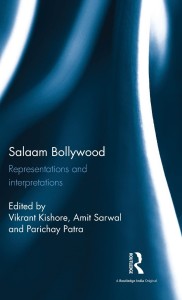

 (0 vote)
Average rating:
| 0 | rating |  = We can do without = We can do without |
| 0 | rating |  = Good book = Good book |
| 0 | rating |  = Excellent book = Excellent book |
| 0 | rating |  = Unique / a reference = Unique / a reference |
Your rating: -
Book Presentation:
This book traces the journey of popular Hindi cinema from 1913 to contemporary times when Bollywood has evolved as a part of India’s cultural diplomacy. Avoiding a linear, developmental narrative, the book re-examines the developments through the ruptures in the course of cinematic history. The essays in the volume critically consider transformations of the Hindi film industry from its early days to its present self-referential mode, issues of gender, dance and choreography, Bombay cinema’s negotiations with the changing cityscape and urbanisms, and concentrate on its multifarious regional, national and transnational implications in the 21st century.
One of the most comprehensive volumes on Bollywood, this work presents an analytical overview of the multiple histories of popular cinema in India and will be useful to scholars and researchers interested in film and media studies, South Asian popular culture and modern India, as well as to cinephiles and general readers alike.
About the authors:
Vikrant Kishore is an academic, film-maker, journalist, photographer and currently Lecturer in Media at RMIT University, Melbourne, Australia.Amit Sarwal is Honorary Associate Professor at RMIT University, Melbourne, Australia and Founding Convenor of the Australia–India Interdisciplinary Research Network. Parichay Patra is a doctoral candidate in the Department of Film and Screen Studies, School of Media, Film and Journalism, Monash University, Melbourne, Australia.
> From the same authors:

Cinema and the Indian National Emergency (2025)
Histories and Afterlives
Dir. Parichay Patra and Dibyakusum Ray

Indian Cinema (2019)
Filmic Content, Social Interface and New Technologies
by Vikrant Kishore and Ambrish Saxena
> On a related topic:

Producing Bollywood (2012)
Inside the Contemporary Hindi Film Industry
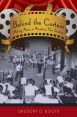
Behind the Curtain (2008)
Making Music in Mumbai's Film Studios

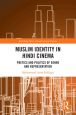
Muslim Identity in Hindi Cinema (2025)
Poetics and Politics of Genre and Representation
Centring Women in Bollywood Biopics (2024)
Empowerment and Agency in Contemporary Indian Cinema
Postcolonial Bollywood and Muslim Identity (2024)
Production, Representation, and Reception
 Back
Back

