


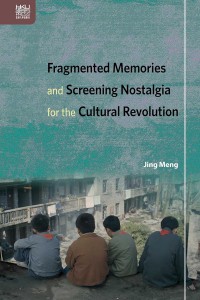
Fragmented Memories and Screening Nostalgia for the Cultural Revolution
by Jing Meng


 (0 vote)
Average rating:
| 0 | rating |  = We can do without = We can do without |
| 0 | rating |  = Good book = Good book |
| 0 | rating |  = Excellent book = Excellent book |
| 0 | rating |  = Unique / a reference = Unique / a reference |
Your rating: -
Book Presentation:
Fragmented Memories and Screening Nostalgia for the Cultural Revolution argues that films and TV dramas about the Cultural Revolution made after China’s accession to the WTO in 2001 tend to represent personal memories in a markedly sentimental, nostalgic, and fragmented manner. This new trend is a significant departure from earlier films about the subject, which are generally interpreted as national allegories, not private expressions of grief, regret or other personal feelings. With China entering a postsocialist era, the ideological conflation of socialism and global capitalism has generated enough cultural ambiguity to allow a space for the expression of personalized reminiscences of the past. By presenting these personal memories―in effect alternative narratives to official history―on screen, individuals now seem to have some agency in narrating and constructing history. At the same time such autonomy can be easily undermined since the promotion of the sentiment of nostalgia is often subjected to commodification. Sentimental treatments of the past may simply be a marketing strategy. Underplaying political issues is also a ‘safer’ way for films and TV dramas to secure public release in mainland China. Meng concludes that the new mode of representing the past is shaped by the current sociopolitical conditions: these personal memories and micro-narratives can be understood as the defining ways of remembering in China’s postsocialist era.
About the Author:
Jing Meng is an assistant professor of media at Peking University, Shenzhen campus.
Press Reviews:
‘Fragmented Memories and Screening Nostalgia for the Cultural Revolution takes a comprehensive look at contemporary screen depictions of the Cultural Revolution. The book convincingly ties close readings of the works analysed with broader social and cultural phenomena that already are hot topics of study and debate, offering something original while also being closely engaged with existing scholarship.’ ―Jason McGrath, University of Minnesota
‘Breaking through the tired dichotomy between personal and collective narratives, individual memory and grand history, this refreshing book sheds much light on film memories of the Cultural Revolution in the post-socialist millennium. In a limpid and engaging style, Jing Meng probes memory’s nostalgia and imbrication with the collective destiny, and critiques the personal focus aligned with neoliberal economy and commodification.’ ―Ban Wang, Stanford University
> On a related topic:
Ethnic Minority Children in Post-Socialist Chinese Cinema (2021)
Allegory, Identity, and Geography
by Zhenhui Yan
Urban Horror (2020)
Neoliberal Post-Socialism and the Limits of Visibility
DV-Made China (2015)
Digital Subjects and Social Transformations After Independent Film
by Zhang Zhen and Angela Zito
 Back
Back

