


Picturing Ghosts
Memories, Traces and Prophesies of Rebellion in Postdictatorship Chilean Film
by Struan Gray

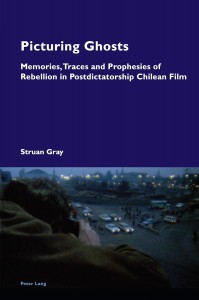

 (0 vote)
Average rating:
| 0 | rating |  = We can do without = We can do without |
| 0 | rating |  = Good book = Good book |
| 0 | rating |  = Excellent book = Excellent book |
| 0 | rating |  = Unique / a reference = Unique / a reference |
Your rating: -
Book Presentation:
How can the afterlives of anticapitalist and antidictatorship resistance enliven contemporary imaginaries of social justice? Where can the legacies of authoritarianism be spatially located and challenged? And what roles can film play in reckoning with these spectral inheritances?
Picturing Ghosts addresses these questions in relation to postdictatorship Chile, a country that has become a nodal point in global geopolitical narratives about the obsolescence of socialism, the birth of neoliberalism and «the end of history». Exploring how the Chilean «transition to democracy» has been narrated in film, the book focuses on stories of haunting and rebellion that unsettle hegemonic temporalities and frameworks of memory. Engaging with the idea of haunting as a trope, a conceptual metaphor and a structure of feeling, it considers different approaches to reckoning with the present past as an emancipatory presence – a multiplicity of unfinished projects and unanswered questions that the cultural imaginary of late capitalism hastens to smooth over.
Through a cartographic approach to analysis, this study looks beyond established landscapes of memorialisation in Chile, encountering rebellious subjects and stories in houses and haciendas, poblaciones, the presidential palace, the Atacama Desert, shopping malls, public schools and university campuses. In doing so, it contributes to an emerging field of research that problematises the dominant spatial and temporal imaginaries of «post-conflict» transitions, striving to construct more inclusive and transformative conceptions of truth, justice and emancipation.
About the Author:
Struan Gray is a lecturer in the School of Film and Television at Falmouth University. He completed his doctoral studies at the Centre for Memory, Narrative and Histories, University of Brighton, and has been a visiting fellow at the Centre for Latin American and Caribbean Studies, University of London. His research engages with debates about representation, haunting and the politics of time in «post-conflict» and postdictatorship societies.
See the publisher website: Peter Lang
> On a related topic:
Transnational Cinema Solidarity (2025)
Chilean Exile Film and Video after 1973
Subject: Countries > Latin America

Modernity at the Movies (2023)
Cinema-going in Buenos Aires and Santiago, 1915-1945
Subject: Countries > Latin America
Remaking Home (2022)
Domestic Spaces in Argentine and Chilean Film, 2005-2015
Subject: Countries > Latin America
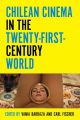
Chilean Cinema in the Twenty-First-Century World (2020)
Dir. Carl Fischer and Vania Barraza
Subject: Countries > Latin America
Political Documentary Cinema in Latin America (2024)
Dir. Antonio Traverso and Kristi Wilson
Subject: Countries > Latin America
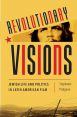
Revolutionary Visions (2020)
Jewish Life and Politics in Latin American Film
Subject: Countries > Latin America
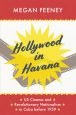
Hollywood in Havana (2019)
US Cinema and Revolutionary Nationalism in Cuba before 1959
by Megan Feeney
Subject: Countries > Latin America
Cuban Film Media, Late Socialism, and the Public Sphere (2016)
Imperfect Aesthetics
Subject: Countries > Latin America
 Back
Back

