


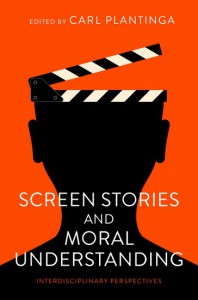
Screen Stories and Moral Understanding
Interdisciplinary Perspectives (livre en anglais)


 (0 vote)
Moyenne des votes :
| 0 | vote |  = On peut s'en passer = On peut s'en passer |
| 0 | vote |  = Bon livre = Bon livre |
| 0 | vote |  = Excellent livre = Excellent livre |
| 0 | vote |  = Unique / une référence = Unique / une référence |
Votre vote : -
Description de l'ouvrage :
• Features the work of top scholars from philosophy, communication, media psychology, and film and media studies
• Includes chapters by some of the leading scholars on how screen stories can generate moral understanding
• Offers new insights into the role of screen stories in the modern world
The stories we tell and show, in whatever medium, play varied roles in human cultures. One such role is to contribute to moral understanding. Moral understanding goes beyond moral knowledge; it is a complex cognitive achievement that may consist of one or more of the following: the ability to understand why, to ask the right questions, categorization, the application of models to specific incidents, or the capacity to make connections between morally charged situations that have a common underlying meaning.
While the disciplines of communication, psychology, philosophy, and film and media studies have all made significant scholarly progress on this issue, they make different grounding assumptions and use different terminologies. Screen Stories and Moral Understanding approaches the topic from an interdisciplinary perspective and explores the conditions under which stories we view on screens-movies, streamed series, and television-can lead to moral understanding in viewers.
In five sections, this book explores the nature of moral understanding in relation to screen stories, the means by which moving image fictions can transfer knowledge to and cultivate perspectives in viewers, the role of affect in generating moral understanding, the viewer's engagement with characters, and what we do with screen stories after viewing them.
À propos de l'auteur :
Carl Plantinga, Senior Research Fellow, Calvin University Carl Plantinga is Senior Research Fellow at Calvin University. Among his books are Screen Stories: Emotion and the Ethics of Engagement (2018) and Moving Viewers: American Film and the Spectator's Experience (2009).
> Du même auteur :

The Routledge Companion to Philosophy and Film (2011)
Dir. Paisley Livingston et Carl Plantinga
Sujet : Théorie
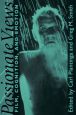
Passionate Views (1999)
Film, Cognition, and Emotion
Dir. Carl Plantinga et Greg M. Smith
Sujet : Sociologie
> Sur un thème proche :
Cine-Ethics (2016)
Ethical Dimensions of Film Theory, Practice, and Spectatorship
Dir. Jinhee Choi et Mattias Frey
Sujet : Théorie

Iconoclasm in European Cinema (2025)
The Ethics and Aesthetics of Image Destruction
Sujet : Sociologie

Movies and Moral Dilemma Discussions (2020)
A Practical Guide to Cinema Based Character Development
Dir. Stewart Waters et William B. Russell III
Sujet : Sociologie
 Retour


