


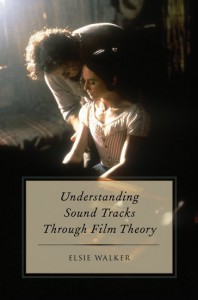
Understanding Sound Tracks Through Film Theory
de Elsie Walker


 (0 vote)
Moyenne des votes :
| 0 | vote |  = On peut s'en passer = On peut s'en passer |
| 0 | vote |  = Bon livre = Bon livre |
| 0 | vote |  = Excellent livre = Excellent livre |
| 0 | vote |  = Unique / une référence = Unique / une référence |
Votre vote : -
Description de l'ouvrage:
• Covers such a broad range of theoretical approaches to sound tracks for a general scholarly audience
• Emphasizes transferable skills of close aural analysis
• Deals with an exceptionally broad range of films
• Includes a glossary of terms
• Features over a hundred film stills that enliven the reading experience
Until recently, most scholars neglected the power of hearing cinema as well as seeing it. Understanding Sound Tracks Through Film Theory breaks new ground by redirecting the arguments of foundational texts within film theory to film sound tracks. The book includes sustained analyses of particular films according to a range of theoretical approaches: psychoanalysis, feminism, genre studies, post-colonialism, and queer theory. The films come from disparate temporal and industrial contexts: from Classical Hollywood Gothic melodrama (Rebecca (1940)), to contemporary, critically-acclaimed science fiction (Gravity (2013)). Along with sound tracks from canonical American films, such as The Searchers (1956) and To Have and Have Not (1944), Walker analyzes independent Australasian films: examples include Heavenly Creatures (1994), a New Zealand film that uses music to empower its queer female protagonists; and Ten Canoes (2006), the first Australian feature film with a script entirely in Aboriginal languages. Understanding Sound Tracks Through Film Theory thus not only calls new attention to the significance of sound tracks-it also focuses on the sonic power of characters representing those whose voices have all too often been drowned out.
Dominant studies of film music tend to be written for those who are already musically trained. Similarly, studies of film sound tend to be jargon-heavy. By contrast, Understanding Sound Tracks Through Film Theory is both rigorous and accessible to all scholars with a basic grasp of cinematic and musical structures. Moreover, the book brings together film studies, musicology, history, politics, and culture. Therefore, Understanding Sound Tracks Through Film Theory will resonate for scholars across the liberal arts, and for anyone interested in challenging the so-called "hegemony of the visual."
À propos de l'auteur :
Elsie Walker, Associate Professor of Film Studies, Salisbury University Elsie Walker is Associate Professor of Film Studies at Salisbury University, Maryland. She has taught film in three countries (New Zealand and England, as well as the United States) and she has published many articles on film, sound tracks, and adaptations of Shakespeare. She co-edited Conversations With Directors (2008), and she is coeditor-in-chief of Literature/Film Quarterly.
Revue de Presse:
"Elsie Walker's multifaceted approach in Understanding Sound Tracks Through Film Theory provides a rich, strategic bridging of musicology to the venerable and varied tenets of film theory. Rigorously researched, it is pioneering inquiry, crowned by a bevy of stimulating analyses." - Ron Sadoff, Director, NYU Steinhardt Film Music and co-founder, Music and the Moving Image
"a fabulous feat of film scholarship, both for the range of material it encompasses and the lucidity with which it handles complex ideas ... dazzling ... [the book] could hardly be bettered." - Neil Sinyard
"Deftly negotiating the territory between introducing theoretical concepts and developing nuanced analyses, Walker's approach is ideally suited to engaging those new to considering how profoundly music and sound influence the experience of cinema." - Robynn J. Stilwell, Georgetown University
> Du même auteur :

> Sur un thème proche :
Listening Deafly and the Rhetoric of Sound (2023)
Voice, Silence, and Listening in Hollywood Films
Static in the System (2019)
Noise and the Soundscape of American Cinema Culture
Sound Design is the New Score (2019)
Theory, Aesthetics, and Erotics of the Integrated Soundtrack
 Retour

