


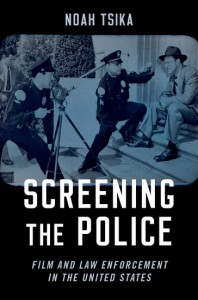
Screening the Police
Film and Law Enforcement in the United States
by Noah Tsika


 (0 vote)
Average rating:
| 0 | rating |  = We can do without = We can do without |
| 0 | rating |  = Good book = Good book |
| 0 | rating |  = Excellent book = Excellent book |
| 0 | rating |  = Unique / a reference = Unique / a reference |
Your rating: -
Book Presentation:
• Looks at the ways cinema contributed to the professionalization and expansion of police in the United States
• Draws on never-before-cited sources, providing new insights into film and police histories
• Highlights the historic and surprising symbiosis between the Hollywood system and law enforcement
American police departments have presided over the business of motion pictures since the end of the nineteenth century. Their influence is evident not only on the screen but also in the ways movies are made, promoted, and viewed in the United States. Screening the Police explores the history of film's entwinement with law enforcement, showing the role that state power has played in the creation and expansion of a popular medium.
For the New Jersey State Police in the 1930s, film offered a method of visualizing criminality and of circulating urgent information about escaped convicts. For the New York Police Department, the medium was a means of making the agency world-famous as early as 1896. Beat cops became movie stars. Police chiefs made their own documentaries. And from Maine to California, state and local law enforcement agencies regularly fingerprinted filmgoers for decades, amassing enormous records as they infiltrated theatres both big and small.
As author Noah Tsika demonstrates, understanding the scope of police power in the United States requires attention to an aspect of film history that has long been ignored. Screening the Police reveals the extent to which American cinema has overlapped with the politics and practices of law enforcement.
About the Author:
Noah Tsika, Associate Professor of Media Studies, Queens College, City University of New York Noah Tsika is Associate Professor of Media Studies at Queens College, City University of New York He is a contributing editor of Africa is a Country and the author of several books.
> From the same author:


Traumatic Imprints (2018)
Cinema, Military Psychiatry, and the Aftermath of War
by Noah Tsika
Subject: Sociology
> On a related topic:
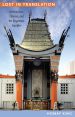
Lost in Translation (2010)
Orientalism, Cinema, and the Enigmatic Signifier
by Homay King
Subject: Sociology
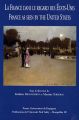
La France dans le regard des Etats-Unis (2006)
France as seen by the United States
Dir. Frédéric Monneyron and Martine Xiberras
(in French and English)
Subject: Sociology
Projections of War (1999)
Hollywood, American Culture, and World War II, revised and updated edition
Subject: Sociology
 Back
Back

