

The Movies of Racial Childhoods
Screening Self-Sovereignty in Asian/America



 (0 vote)
Average rating:
| 0 | rating |  = We can do without = We can do without |
| 0 | rating |  = Good book = Good book |
| 0 | rating |  = Excellent book = Excellent book |
| 0 | rating |  = Unique / a reference = Unique / a reference |
Your rating: -
Book Presentation:
In The Movies of Racial Childhoods Celine Parre as Shimizu examines early twenty-first-century cinematic representations of Asian and Asian American children. Drawing on psychoanalysis and her own perspective as a mother grieving for a deceased child, Shimizu considers how cinema renders Asian American children through sexualized racial difference, infantilization, and premature adultification. She looks at how Asian American childhood is characterized in film through experiences of alienation and trauma and contends that childhood development requires finding freedom and self-sovereignty through agentic attunement. In analyzing films that focus on queer Asian American youth such as Spa Night (2016) and Driveways (2019) and those that explore the trauma of being an immigrant like Yellow Rose (2019) and The Half of It (2020), Shimizu demonstrates that films can prompt viewers to evaluate their own childhood development. They also allow the opportunity to understand the demands placed upon Asian American children, particularly in regard to race and sexuality. In this way, cinema becomes a vehicle for empowering our inner child and the children all around us.
About the Author:
Celine Parreñas Shimizu is Dean of the Arts and Distinguished Professor of Film and Digital Media at the University of California, Santa Cruz. She is author of The Hypersexuality of Race: Performing Asian/American Women on Screen and Scene, also published by Duke University Press. Her films include The Celine Archive and 80 Years Later (Women Make Movies).
Press Reviews:
"The relative absence of Asian Americans on the silver screen makes their representation something we cannot not want. In this profound and personal meditation, Celine Parreñas Shimizu cautions us not to assume that representation and belonging go hand in hand. Instead, she analyzes depictions of childhood in Asian American cinema as occasions for working through the psychic traumas that overdetermine our social attachments from the very moment we are born into a world of racial loss and grief." - David L. Eng, coauthor of Racial Melancholia, Racial Dissociation: On the Social and Psychic Lives of Asian Americans
"The Movies of Racial Childhoods is like nothing I have ever read. It is a document of a mother grieving, a film scholar theorizing the healing work of narrative cinema, and a filmmaker who understands that ‘trauma demands representation so as to create new realities.’ Celine Parreñas Shimizu’s writing about the death of her child and her devotion to film is both tender and revelatory. Interweaving psychoanalysis, Asian American studies, trauma theory, cinema studies, and personal narrative, Shimizu cultivates space for us to collectively grieve and to reawaken the possibilities of childhood dreaming." - Nicole R. Fleetwood, author of Marking Time: Art in the Age of Mass Incarceration
"[Celine Parreñas Shimizu] uses psychoanalytic approaches to cinema in exploring the alienation and joy felt by Asian American youth especially in terms of race and gender. These conflicts overlap with the youth’s simultaneous infantilization, sexualization, and adultification. Shimizu explores representations of childhood, race, gender, and sexuality as a mode of empowerment towards self-reflection and attunement in cinema and child-rearing both." - Gaby Messino, UC Santa Cruz
"The movies of racial childhoods... is a poignant, keen, emotional, and moving interpretation, analysis, and dissection of the intersectional cultural complexes of Asian/America racial childhoods and young adults who navigate the mourning of death, parental absence, parental deportation, poverty, race, gender, gender expression, queer gender, age, sexuality, religion, immigrant border crossings, and acculturation stresses in Asian independent and Asian/America mainstream films." - Theodoric Manley, Ethnic and Racial Studies
> From the same author:

The Hypersexuality of Race (2007)
Performing Asian/American Women on Screen and Scene
Subject: Genre > Porn films
> On a related topic:

Whitewashing the Movies (2021)
Asian Erasure and White Subjectivity in U.S. Film Culture
by David C. Oh
Subject: Sociology
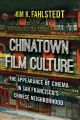
Chinatown Film Culture (2020)
The Appearance of Cinema in San Francisco's Chinese Neighborhood
Subject: Sociology
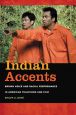
Indian Accents (2013)
Brown Voice and Racial Performance in American Television and Film
Subject: Sociology

Romance and the "Yellow Peril" (1994)
Race, Sex, and Discursive Strategies in Hollywood Fiction
Subject: Sociology
 Back
Back