


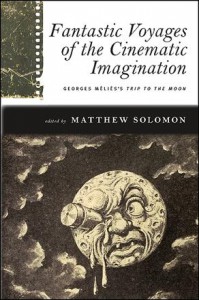
Fantastic Voyages of the Cinematic Imagination
Georges Méliès's Trip to the Moon
Edited by Matthew Solomon


 (0 vote)
Average rating:
| 0 | rating |  = We can do without = We can do without |
| 0 | rating |  = Good book = Good book |
| 0 | rating |  = Excellent book = Excellent book |
| 0 | rating |  = Unique / a reference = Unique / a reference |
Your rating: -
Book Presentation:
An authoritative and comprehensive guide to cinema’s first true blockbuster.
"Best moving pictures I ever saw." Thus did one Vaudeville theater manager describe Georges Méliès's A Trip to the Moon [Le Voyage dans la lune], after it was screened for enthusiastic audiences in October 1902. Cinema's first true blockbuster, A Trip to the Moon still inspires such superlatives and continues to be widely viewed on DVD, on the Internet, and in countless film courses. In Fantastic Voyages of the Cinematic Imagination, leading film scholars examine Méliès's landmark film in detail, demonstrating its many crucial connecions to literature, popular culture, and visual culture of the time, as well as its long "afterlife" in more recent films, television, and music videos. Together, these essays make clear that Méliès was not only a major filmmaker but also a key figure in the emergence of modern spectacle and the birth of the modern cinematic imagination, and by bringing interdisciplinary methodologies of early cinema studies to bear on A Trip to the Moon, the contributors also open up much larger questions about aesthetics, media, and modernity.
In his introduction, Matthew Solomon traces the convoluted provenance of the film's multiple versions and its key place in the historiography of cinema, and an appendix contains a useful dossier of primary-source documents that contextualize the film's production, along with translations of two major articles written by Méliès himself.
About the Author:
Matthew Solomon is Associate Professor of Cinema Studies at the College of Staten Island, City University of New York. He is the author of Disappearing Tricks: Silent Films, Houdini, and the New Magic of the Twentieth Century.
Press Reviews:
"Fantastic Voyages is a significant volume of criticism, one that has a clear appeal to historians of early film, but also one that, thanks to the quality and breadth of its contributions, has much to offer to a wider audience." — Science Fiction Studies
"Matthew Solomon … deserves much credit for making the point that the study of an individual film by a range of scholars ought to find a larger place among the more traditional auteur and genre studies." — Film History
"This superbly conceived collection enhances understanding of a keystone film … Excellent early-cinema scholars … illuminate [Méliès's] articulate artistic credo and his meticulous and inventive practice of the new art form … A necessary addition to comprehensive film collections." — CHOICE
"This is a welcome addition to the field of early film history. It does that wonderful thing that the best film histories do—it points out the relevance of its subject to areas beyond cinema studies. In this case the focus on one filmmaker affords a deeper understanding of not only Méliès and the context of his work, but also its impact on aesthetic and critical debates ranging from the avant-garde of the early twentieth century to those concerning technology and vision in the twenty-first century." — Michael Hammond, author of The Big Show: British Cinema Culture in the Great War, 1914–1918
"While focusing on A Trip to the Moon, the book highlights such diverse issues as the film's artistic sources, its historical reception over time, its place within the career of Méliès, and its relation to other works of cinema." — Lucy Fischer, author of Designing Women: Cinema, Art Deco, and the Female Form
See the publisher website: State University of New York Press
See A Trip to the Moon (1902) on IMDB ...
> From the same author:
The Biggest Thing in Show Business (2024)
Living It Up with Martin & Lewis
by Murray Pomerance and Matthew Solomon
Subject: Actor > Jerry Lewis, Dean Martin
Méliès Boots (2022)
Footwear and Film Manufacturing in Second Industrial Revolution Paris
Subject: Director > Georges Méliès

Disappearing Tricks (2010)
Silent Film, Houdini, and the New Magic of the Twentieth Century
Subject: Silent Cinema
> On a related topic:
Discovering Lost Films of Georges Méliès (2020)
in Fin-de-siècle Flip Books (1896-1901)
by Thierry Lecointe, Pascal Fouché, Robert Byrne and Pamela Hutchinson
Subject: Director > Georges Méliès
The First Movie Studio in Texas (2026)
Gaston Méliès's Star Film Ranch
by Kathryn Fuller-Seeley and Frank Thompson
Subject: Silent Cinema
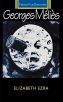
Artificially Arranged Scenes (1979)
The Films of Georges Melies
by John Frazer
Subject: Director > Georges Méliès
The Brakhage lectures (1972)
Georges Méliès, David Wark Griffith, Carl Theodore Dreyer, Sergei Eisenstein
Subject: Director > Stan Brakhage
The Invention of the Spectator (2026)
How has Early film Spectatorship shaped Audience and Reception Theory:Selected Writings 1910-1920
Subject: Silent Cinema
Finding Birt Acres (2025)
The Rediscovery of a Film Pioneer
by Deac Rossell, Barry Anthony and Peter Domankiewicz
Subject: Silent Cinema
 Back
Back

