


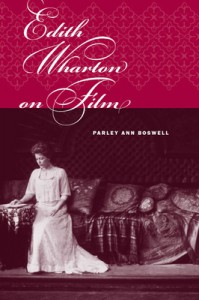
Edith Wharton on Film


 (0 vote)
Average rating:
| 0 | rating |  = We can do without = We can do without |
| 0 | rating |  = Good book = Good book |
| 0 | rating |  = Excellent book = Excellent book |
| 0 | rating |  = Unique / a reference = Unique / a reference |
Your rating: -
Book Presentation:
Edith Wharton (1862–1937), who lived nearly half of her life during the cinema age when she published many of her well-known works, acknowledged that she disliked the movies, characterizing them as an enemy of the imagination. Yet her fiction often referenced film and popular Hollywood culture, and she even sold the rights to several of her novels to Hollywood studios.
Edith Wharton on Film explores these seeming contradictions and examines the relationships among Wharton’s writings, the popular culture in which she published them, and the subsequent film adaptations of her work (three from the 1930s and four from the 1990s). Author Parley Ann Boswell examines the texts in which Wharton referenced film and Hollywood culture and evaluates the extant films adapted from Wharton’s fiction.
The volume introduces Wharton’s use of cinema culture in her fiction through the 1917 novella Summer, written during the nation’s first wave of feminism, in which the heroine Charity Royall is moviegoer and new American woman, consumer and consumable. Boswell considers the source of this conformity and entrapment, especially for women. She discloses how Wharton struggled to write popular stories and then how she revealed her antipathy toward popular movie culture in two late novels.
Boswell describes Wharton’s financial dependence on the American movie industry, which fueled her antagonism toward Hollywood culture, her well-documented disdain for popular culture, and her struggles to publish in women’s magazines.
This first full-length study that examines the film adaptations of Wharton’s fiction covers seven films adapted from Wharton’s works between 1930 and 2000 and the fifty-year gap in Wharton film adaptations. The study also analyzes Sophy Viner in The Reef as pre-Hollywood ingénue, characters in Twilight Sleep and The Children and the real Hollywood figures who might have inspired them, and The Sheik and racial stereotypes.
Boswell traces the complicated relationship of fiction and narrative film, the adaptations and cinematic metaphors of Wharton’s work in the 1990s, and Wharton’s persona as an outsider. Wharton’s fiction on film corresponds in striking ways to American noir cinema, says Boswell, because contemporary filmmakers recognize and celebrate the subversive qualities of Wharton’s work.
Edith Wharton on Film, which includes eleven illustrations, enhances Wharton’s stature as a major American author and provides persuasive evidence that her fiction should be read as American noir literature.
About the Author:
Parley Ann Boswell is a professor at Eastern Illinois University and the coauthor of Reel Rituals: Ritual Occasions from Baptisms to Funerals in Hollywood Movies, 1945–1995.
See the publisher website: Southern Illinois University Press
> From the same author:
Reel Rituals (1999)
Ritual Occasions from Baptisms to Funerals in Hollywood Films, 1945-1995
by Parley Ann Boswell and Paul Loukides
Subject: Sociology
> On a related topic:

But Have You Read the Book? Romance Edition (2026)
40 Love Stories That Inspired Our Favorite Films
Subject: Technique > Adaptation

The History of German Literature on Film (2025)
Subject: Technique > Adaptation
Film Adaptations of Russian Classics (2024)
Dialogism and Authorship
Dir. Alexandra Smith and Olga Sobolev
Subject: Technique > Adaptation


Retelling Jane Austen (2024)
Essays on Recent Adaptations and Derivative Works
Dir. Tammy Powley and April Van Camp
Subject: Technique > Adaptation

English Classics in Audiovisual Translation (2024)
Dir. Irene Ranzato and Luca Valleriani
Subject: Technique > Adaptation
Hemingway and Film (2024)
Reflections on Teaching, Reading, and Understanding
Dir. Cam Cobb and Marc K. Dudley
Subject: Technique > Adaptation
Wilde in the Dream Factory (2024)
Decadence and the American Movies
by Kate Hext
Subject: Technique > Adaptation
 Back
Back

