


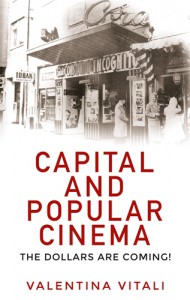
Capital and Popular Cinema
The Dollars Are Coming!


 (0 vote)
Average rating:
| 0 | rating |  = We can do without = We can do without |
| 0 | rating |  = Good book = Good book |
| 0 | rating |  = Excellent book = Excellent book |
| 0 | rating |  = Unique / a reference = Unique / a reference |
Your rating: -
Book Presentation:
Popular cinema has mostly been discussed from a 'cult' perspective that celebrates uncritically its 'transgressive' qualities. Capital and popular cinema responds to the need for a more solid academic approach by situating 'low' film genres in their economic and culturally-specific contexts and by exploring the interconnections between those contexts, the immediate industrial-financial interests sustaining the films, and the films' aesthetics. Through the examination of three different cycles in film production - the Italian giallo of Mario Bava, the Mexican films of Fernando Méndez, and the Hindi horror cinema of the Ramsay Brothers - Capital and popular cinema proposes a comparative approach that accounts for the whole of a national film industry's production ('popular' and 'canonic'), and is applicable to the study of film genres globally.
Based on new research, Capital and popular cinema will be of interest to undergraduate and post-graduate students, researchers and scholars of cult and exploitation cinema, genre cinema, national cinema, film and media theory, and area studies.
About the Author:
Valentina Vitali is Reader in Film Studies at the University of East London
Press Reviews:
'Capital and Popular Cinema . makes a convincing case for a more politically engaged form of film studies:
For the study of films cannot be reduced to the chronicling of films and cinema. It emerged as a radical, intellectual endeavour to figure out how, precisely, industrial cultural artefacts condition our everyday lives, and, with that aesthetic understanding, to arrive at a clearer sense of where we may want to be heading. (p. 167)
The comparative model at the heart of the book also responds to the acknowledged need to reshape national film historiography in order to interrogate the impact of transnational flows and exchanges. Given the importance of the distinct national contexts of Italy, Mexico and India within Vitali's model, however, this is not an approach to the transnational that downplays the importance of the nation state but rather positions the national within a comparative framework. Indeed, the book concludes with a discussion of possible future case studies on Spain, Germany, Turkey and Nigeria so it is clear that this is a project that takes seriously Paul Willemen's call for a truly comparative film studies, and has considerable potential for further development beyond this initial monograph.'
The Year's Work in Critical and Cultural Theory
> On a related topic:
Media Heterotopias (2018)
Digital Effects and Material Labor in Global Film Production
Subject: Economics

Bastards at Work (2021)
Universal Lessons on Bullying from Contemporary French Storytelling


Filmonomics (2025)
Economists Discuss the Silver Screen
Dir. André de Palma and Luc Leruth
Subject: Economics
Television's Second Golden Age (2025)
Politics and International Relations in the Era of HBO and Streaming TV
Subject: Economics

Global Development of Asian Cinema in the Film Industry (2025)
Dir. Changsong Wang, Cheng Fei Yong and Rustono Farady Marta
Subject: Economics
 Back
Back

