


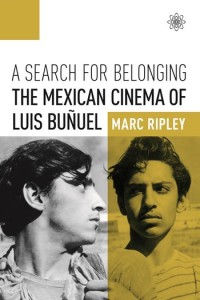
A Search for Belonging
The Mexican Cinema of Luis Buñuel
by Marc Ripley


 (0 vote)
Average rating:
| 0 | rating |  = We can do without = We can do without |
| 0 | rating |  = Good book = Good book |
| 0 | rating |  = Excellent book = Excellent book |
| 0 | rating |  = Unique / a reference = Unique / a reference |
Your rating: -
Book Presentation:
As one of the foremost Spanish directors of all time, Luis Buñuel’s filmography has been the subject of innumerable studies. Despite the fact that the twenty films he made in Mexico between 1947 and 1965 represent the most prolific stage of his career as a filmmaker, these have remained relatively neglected in writing on Buñuel and his work. This book focuses on nine of the director’s films made in Mexico in order to show that a concerted focus on space, an important aspect of the films’ narratives that is often intimated by scholars, yet rarely developed, can unlock new philosophical meaning in this rich body of work.
Although in recent years Buñuel’s Mexican films have begun to enjoy a greater presence in criticism on the director, they are often segregated according to their perceived critical value, effectively creating two substrands of work: the independent movies and the studio potboilers. The interdisciplinary approach of this book unites the two, focusing on films such as Los olvidados, Nazarín, and El ángel exterminador alongside La Mort en ce jardin, The Young One, and Simón del desierto, among others. In doing so, it avoids the tropes most often associated with Buñuel’s cinema—surrealism, Catholicism, the derision of the bourgeoisie—and the approach most often invoked in analysis of these themes: psychoanalysis. Instead, this book takes inspiration from the fields of human geography, anthropology, and philosophy, applying these to film-focused readings of Buñuel’s Mexican cinema to argue that ultimately these films depict an overriding sense of placelessness, overtly or subliminally enacting a search for belonging that forces the viewer to question what it means to be in place.
About the Author:
Marc Ripley is a teaching fellow in Spanish and Latin American studies at the University of Leicester.
Press Reviews:
A major new addition to Buñuel scholarship, this book should be required reading on all university courses. An intelligent and impeccably researched account of the recurring motif of the search for the impossible in Buñuel’s work that draws the commercial and more auteurist films together in a comprehensive and elegant discussion of the aesthetic, ideological, and ethical implications of Buñuel’s cinema that is inspired by the interdisciplinary focus of the spatial turn. Jo Evans, University College London
See the publisher website: Wallflower Press
See the complete filmography of Luis Buñuel on the website: IMDB ...
> On a related topic:


Conversations with Buñuel (2017)
Interviews with the Filmmaker, Family Members, Friends and Collaborators
by Max Aub
Subject: Director > Luis Buñuel
A Companion to Luis Buñuel (2013)
Dir. Rob Stone and Julián Daniel Gutiérrez-Albilla
Subject: Director > Luis Buñuel


Luis Bunuel (2011)
The Red Years, 1929-1939
by Román Gubern and Paul Hammond
Subject: Director > Luis Buñuel

Luis Bunuel (2004)
New Readings
by Isabel Santaolalla and Peter William Evans
Subject: Director > Luis Buñuel
An Unspeakable Betrayal (2002)
Selected Writings of Luis Buñuel
by Luis Buñuel
Subject: Director > Luis Buñuel
 Back
Back

