


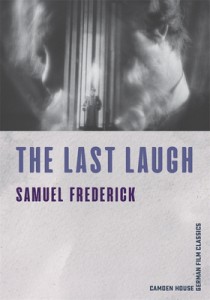
The Last Laugh


 (0 vote)
Average rating:
| 0 | rating |  = We can do without = We can do without |
| 0 | rating |  = Good book = Good book |
| 0 | rating |  = Excellent book = Excellent book |
| 0 | rating |  = Unique / a reference = Unique / a reference |
Your rating: -
Book Presentation:
A penetrating new reading of Murnau's classic silent film that shows its transitional status, both historically and stylistically, while emphasizing its innovative camerawork and the ethical stakes of its story.
An undisputed masterpiece of silent cinema, F. W. Murnau's The Last Laugh (1924) stars the larger-than-life Emil Jannings as a proud hotel porter who is demoted to lowly washroom attendant. One worker's misfortune becomes a tragic turning point in a social drama as much about the struggling Weimar Republic, which had just overcome several years of social, political, and economic instability, as about its working-class citizens. At once clinging to the symbols of the old order while helplessly thrust into an unforgiving modern world, Jannings's fallen porter embodies the contradictions of this transitional moment for the young democracy. Samuel Frederick shows us that Murnau's film is similarly transitional: born at the crossroads between the Expressionist style of the early 1920s and the emerging aesthetics of New Objectivity, it is both soberly realistic and oneirically distorted. With only one intertitle, The Last Laugh's flow of images is complemented by cinematographer Karl Freund's innovative mobile camera, which, "unchained" from the tripod, swims effortlessly through the film's different urban spaces. Here, inanimate objects become charged with potency and architecture is animated, conveying both allure and danger. Frederick's incisive analysis of the film foregrounds the visual dynamism of its technological and aesthetic experimentation while also pursuing the ethical implications of its central figure's downfall.
See the publisher website: Camden House
See The Last Laugh (1924) on IMDB ...
> Books with the same or similar title:
> On a related topic:
The Nosferatu Story (2025)
The Seminal Horror Film, Its Predecessors and Its Enduring Legacy
by Rolf Giesen

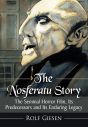
The Nosferatu Story (2019)
The Seminal Horror Film, Its Predecessors and Its Enduring Legacy
by Rolf Giesen


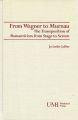
From Wagner to Murnau (1988)
The transposition of romanticism from stage to screen
Subject: Director > F.W. Murnau
 Back
Back

