


Japanese Filmmakers in the Wake of Fukushima
Perspectives on Nuclear Disasters

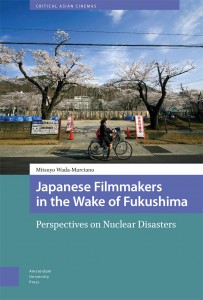

 (0 vote)
Average rating:
| 0 | rating |  = We can do without = We can do without |
| 0 | rating |  = Good book = Good book |
| 0 | rating |  = Excellent book = Excellent book |
| 0 | rating |  = Unique / a reference = Unique / a reference |
Your rating: -
Book Presentation:
In the ongoing aftermath of the nuclear accident in 2011, filmmakers have continued to issue warnings about the state of Japanese society and politics, which remain mired in refusal to change. Nearly a decade in the making, Japanese Filmmakers in the Wake of Fukushima is based on in-person interviews with countless filmmakers, as well as continuous dialogue with them and their work. Author Wada-Marciano has expanded these dialogues to include students, audiences at screenings, critics, and researchers, and her observations are based on down-to-earth-exchange of ideas engaged in over a long period of time.
Filmmakers and artists are in the vanguard of those who grapple with what should be done regarding the struggle against fear of the invisible blight--radiation exposure. Rather than blindly following the mass media and public opinion, they have chosen to think and act independently. While repeatedly viewing and reviewing the film works from the post-Fukushima period, Wada-Marciano felt the unwavering message that emanates from them: "There must be no more nuclear weapons." "There must be no more nuclear power generation." The book is dedicated to convincing readers of the clarity of their message.
About the Author:
Mitsuyo Wada-Marciano is Professor of Cinema and Media Studies, and Director of Joint Degree Transcultural Studies (JDTS) Graduate Program in Kyoto University, Graduate Studies of Letters. She is the author of Nippon Modern: Japanese Cinema of the 1920s and 1930s (2008), Japanese Cinema in the Digital Age (2012), No Nukes: Power of Cinema and Contemporary Art in Post Fukushima Japan (in Japanese, 2021). She is also the co-editor of Horror to the Extreme: Changing Boundaries in Asian Cinema (2009), and the editor of Theorizing "Postwar" in the 1950s Japanese Cinema (in Japanese, 2012) and Rethinking the Media Discourses in Post-3.11 (in Japanese, 2019). Her research interests include Japanese cinema and media culture, East Asian Cinema, queer cinema, and archive film in the digital period.
> From the same author:

Horror to the Extreme (2009)
Changing Boundaries in Asian Cinema
Dir. Jinhee Choi and Mitsuyo Wada-Marciano
Nippon Modern (2008)
Japanese Cinema of the 1920s and 1930s
> On a related topic:
Beyond the High School Film (2026)
Reaching Adulthood in Everyday Japanese Cinema
Film Viewing in Postwar Japan, 1945-1968 (2024)
An Ethnographic Study
Japanese High School Films (2023)
Iconography, Nostalgia and Discipline
Cinema of Discontent (2023)
Representations of Japan's High-Speed Growth
Prostitutes, Hostesses, and Actresses at the Edge of the Japanese Empire (2023)
Fragmenting History
Film's Ghosts (2019)
Tatsumi Hijikata's Butoh and the Transmutation of 1960s Japan
Women in Japanese Cinema (2016)
Alternative Perspectives
 Back
Back

