


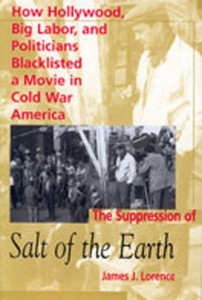
The Suppression of Salt of the Earth
How Hollywood, Big Labor, and Politicians Blacklisted a Movie in the American Cold War


 (0 vote)
Average rating:
| 0 | rating |  = We can do without = We can do without |
| 0 | rating |  = Good book = Good book |
| 0 | rating |  = Excellent book = Excellent book |
| 0 | rating |  = Unique / a reference = Unique / a reference |
Your rating: -
Book Presentation:
This impassioned history tells a story of censorship and politics during the early Cold War. The author recounts the 1950 Empire Zinc Strike in Bayard, New Mexico, the making of the extraordinary motion picture Salt of the Earth by Local 890 of the International Union of Mine, Mill, and Smelter Workers, and the film's suppression by Hollywood, federal and state governments, and organized labor. This disturbing episode reflects the intense fear that gripped America during the Cold War and reveals the unsavory side of the rapprochement between organized labor and big business in the 1950s. In the face of intense political opposition, blackballed union activists, blacklisted Hollywood artists and writers, and Local 890 united to write a script, raise money, hire actors and crews, and make and distribute the film. Rediscovered in the 1970s, Salt of the Earth is a revealing celluloid document of socially conscious unionism that sought to break down racial barriers, bridge class divisions, and emphasize the role of women. Lorence has interviewed participants in the strike and film such as Clinton Jencks and Paul Jarrico and has consulted private and public archives to reconstruct the story of this extraordinary documentary and the coordinated efforts to suppress it.
See the publisher website: University of New Mexico (UNM) Press
See Salt of the Earth (1954) on IMDB ...
> On a related topic:
Hollywood Diplomacy (2020)
Film Regulation, Foreign Relations, and East Asian Representations
Subject: Sociology
The Bondian Cold War (2024)
The Transnational Legacy of a Cultural Icon
Dir. Martin D. Brown, Ronald J. Granieri and Muriel Blaive
Subject: One Film > James Bond
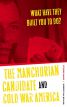
What Have They Built You to Do? (2006)
The Manchurian Candidate And Cold War America
by Matthew Frye Jacobson and Gaspar Gonzalez
Subject: One Film > The Manchurian Candidate
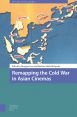
Remapping the Cold War in Asian Cinemas (2024)
Dir. Sangjoon Lee and Darlene Espena
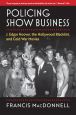
Policing Show Business (2024)
J. Edgar Hoover, the Hollywood Blacklist, and Cold War Movies
Subject: Countries > United States
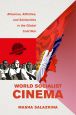
World Socialist Cinema (2023)
Alliances, Affinities, and Solidarities in the Global Cold War
Subject: Sociology
Screening Communities (2019)
Negotiating Narratives of Empire, Nation, and the Cold War in Hong Kong Cinema

 Back
Back

