


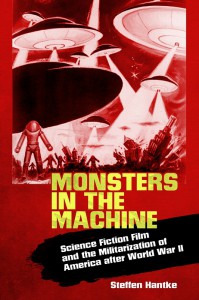
Monsters in the Machine
Science Fiction Film and the Militarization of America After World War II


 (0 vote)
Average rating:
| 0 | rating |  = We can do without = We can do without |
| 0 | rating |  = Good book = Good book |
| 0 | rating |  = Excellent book = Excellent book |
| 0 | rating |  = Unique / a reference = Unique / a reference |
Your rating: -
Book Presentation:
During the 1950s and early 1960s, the American film industry produced a distinct cycle of films situated on the boundary between horror and science fiction. Using the familiar imagery of science fiction--from alien invasions to biological mutation and space travel--the vast majority of these films subscribed to the effects and aesthetics of horror film, anticipating the dystopian turn of many science fiction films to come. Departing from projections of American technological awe and optimism, these films often evinced paranoia, unease, fear, shock, and disgust. Not only did these movies address technophobia and its psychological, social, and cultural corollaries; they also returned persistently to the military as a source of character, setting, and conflict. Commensurate with a state of perpetual mobilization, the US military comes across as an inescapable presence in American life. Regardless of their genre, Steffen Hantke argues that these films have long been understood as allegories of the Cold War. They register anxieties about two major issues of the time: atomic technologies, especially the testing and use of nuclear weapons, as well as communist aggression and/or subversion. Setting out to question, expand, and correct this critical argument, Hantke follows shifts and adjustments prompted by recent scholarly work into the technological, political, and social history of America in the 1950s. Based on this revised historical understanding, science fiction films appear in a new light as they reflect on the troubled memories of World War II, the emergence of the military-industrial complex, the postwar rewriting of the American landscape, and the relative insignificance of catastrophic nuclear war compared to America's involvement in postcolonial conflicts around the globe.
About the Author:
Steffen Hantke has written on contemporary literature, film, and culture. He is author of Conspiracy and Paranoia in Contemporary American Fiction: The Works of Don DeLillo and Joseph McElroy, as well as editor of Horror Film: Creating and Marketing Fear and American Horror Film: The Genre at the Turn of the Millennium (the latter two published by University Press of Mississippi).
> From the same author:


> On a related topic:
May the Armed Forces Be with You (2016)
The Relationship Between Science Fiction and the United States Military
Subject: Genre > Science Fiction
Horror and Science Fiction Cinema and Society (2024)
American Culture and Politics in the Cold War and After Through the Projector Lens
Un-American Dreams (2022)
Apocalyptic Science Fiction, Disimagined Community, and Bad Hope in the American Century
Subject: Genre > Disaster films
Apocalypse Then (2017)
American and Japanese Atomic Cinema, 1951–1967
by Mike Bogue
Subject: Genre > Disaster films
Hollywood's Imperial Wars (2024)
The Vietnam Generation and the American Myth of Heroic Continuity
Contemporary Hollywood Animation (2023)
Style, Storytelling, Culture and Ideology Since the 1990s
by Noel Brown
Dead, White and Blue (2023)
The Zombie and American National Identity
 Back
Back

