


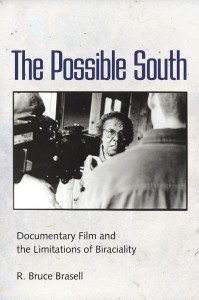
The Possible South
Documentary Film and the Limitations of Biraciality


 (0 vote)
Average rating:
| 0 | rating |  = We can do without = We can do without |
| 0 | rating |  = Good book = Good book |
| 0 | rating |  = Excellent book = Excellent book |
| 0 | rating |  = Unique / a reference = Unique / a reference |
Your rating: -
Book Presentation:
Using cultural theory, author R. Bruce Brasell investigates issues surrounding the discursive presentation of the American South as biracial and explores its manifestation in documentary films, including such works as Tell about the South, bro-ken/ground, and Family Name. After considering the emergence of the region's biraciality through a consideration of the concepts of racial citizenry and racial performativity, Brasell examines two problems associated with this framework. First, the framework assumes racial purity, and, second, it assumes that two races exist. In other words, biraciality enacts two denials, first, the existence of miscegenation in the region and, second, the existence of other races and ethnicities. Brasell considers bodily miscegenation, discussing the racial closet and the southeastern expatriate road film. Then he examines cultural miscegenation through the lens of racial poaching and 1970s southeastern documentaries that use redemptive ethnography. In the subsequent chapters, using specific documentary films, he considers the racial in-betweenness of Spanish-speaking ethnicities (Mosquitoes and High Water, Living in America, Nuestra Communidad), probes issues related to the process of racial negotiation experienced by Asian Americans as they seek a racial position beyond the black and white binary (Mississippi Triangle), and engages the problem of racial legitimacy confronted by federally nonrecognized Native groups as they attempt the same feat (Real Indian).
About the Author:
R. Bruce Brasell has published on film and issues of sexuality, race, and American regionalism in Cinema Journal, Film History, Journal of Film & Video, Film Criticism, Jump Cut, Wide Angle, Mississippi Quarterly, and several anthologies.
> On a related topic:
Projecting Race (2016)
Postwar America, Civil Rights, and Documentary Film
Subject: Genre > Documentary
Celluloid Pueblo (2016)
Western Ways Films and the Invention of the Postwar Southwest
Subject: Genre > Documentary
American Masculinities in Contemporary Documentary Film (2024)
Up Close Behind the Mask
by Sara Martín
Subject: Genre > Documentary
Beyond Bias (2021)
Conservative Media, Documentary Form, and the Politics of Hysteria
by Scott Krzych
Subject: Genre > Documentary
Screening Reality (2020)
How Documentary Filmmakers Reimagined America
by Jon Wilkman
Subject: Genre > Documentary
American Documentary Filmmaking in the Digital Age (2018)
Depictions of War in Burns, Moore, and Morris
Subject: Genre > Documentary

Reel Nature (2009)
America's Romance with Wildlife on Film
by Gregg Mitman
Subject: Genre > Documentary
 Back
Back

