

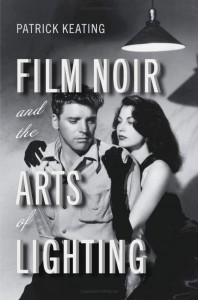
Film Noir and the Arts of Lighting


 (0 vote)
Moyenne des votes :
| 0 | vote |  = On peut s'en passer = On peut s'en passer |
| 0 | vote |  = Bon livre = Bon livre |
| 0 | vote |  = Excellent livre = Excellent livre |
| 0 | vote |  = Unique / une référence = Unique / une référence |
Votre vote : -
Description de l'ouvrage:
More than any other set of films from the classical era, the Hollywood film noir is known for its lighting: the cast shadows, the blinking street signs, the eyes sparkling in the darkness. Each effect is rich in symbolism, evoking a world of danger and doppelgangers. But what happens if we set aside the symbolism? This book offers a new account of film noir lighting, grounded in a larger theory of Hollywood cinematography as emotionally engaging storytelling. Above all, noir lighting is dynamic, switching from darkness to brightness and back again as characters change, locations shift, and fates unfold. Richly illustrated, Film Noir and the Arts of Lighting features in-depth analyses of eleven classic movies: The Asphalt Jungle, Sorry, Wrong Number, Odds against Tomorrow, The Letter, I Wake Up Screaming, Phantom Lady, Strangers on a Train, Sweet Smell of Success, Gaslight, Secret beyond the Door, and Touch of Evil.
À propos de l'auteur :
PATRICK KEATING is a professor in the Department of Communication at Trinity University in San Antonio, Texas. He is the author of The Dynamic Frame: Camera Movement in Classical Hollywood and the editor of Cinematography (Rutgers University Press).
Revue de Presse:
"What a glamorous book! By glamorous, I mean sophisticated, dramatic, and mysterious, using Patrick Keating’s own definition of the term. That is, with his refined textual analysis and emotionally engaging writing style, Keating sheds lights on film noir’s inexplicable seductiveness."
— Daisuke Miyao
"Patrick Keating is our ablest commentator on the power of cinematography in American film's history. In this newest volume, Keating stunningly demonstrates how our overall grasp of Hollywood studio-era filmmaking is enriched when we take film noir not as a subversion of the system but its enrichment — an expressive extension of its visual means to some of their most innovative ends. There are rich insights in every turn of the page of this consequential study."
— Dana Polan
"Like a great cinematographer, Keating sheds light on both the form and function of lighting within film noir, substantially recasting our understanding of much of classical Hollywood cinema in the process. A must-read work for noir aficionados and scholars alike."
— Donna Kornhaber
> Du même auteur :

> Sur un thème proche :
Motion Picture and Video Lighting (2023)
for cinematographers, gaffers and lighting technicians
de Blain Brown
Cinematography of Carl Theodor Dreyer (2018)
Performative Camerawork, Transgressing the Frame
Sujet : Director > Carl Theodor Dreyer
The Aesthetics of Shadow (2013)
Lighting and Japanese Cinema
Hollywood's Melodramatic Imagination (2021)
Film Noir, the Western and Other Genres from the 1920s to the 1950s
de Geoff Mayer
Sujet : Genre > All Genres
 Retour