

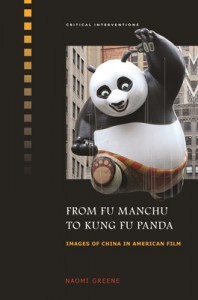
From Fu Manchu to Kung Fu
by Naomi Greene


 (0 vote)
Average rating:
| 0 | rating |  = We can do without = We can do without |
| 0 | rating |  = Good book = Good book |
| 0 | rating |  = Excellent book = Excellent book |
| 0 | rating |  = Unique / a reference = Unique / a reference |
Your rating: -
Book Presentation:
Throughout the twentieth century, American filmmakers have embraced cinematic representations of China. Beginning with D.W. Griffith's silent classic Broken Blossoms (1919) and ending with the computer-animated Kung Fu Panda (2008), this book explores China's changing role in the American imagination. Taking viewers into zones that frequently resist logical expression or more orthodox historical investigation, the films suggest the welter of intense and conflicting impulses that have surrounded China. They make clear that China has often served as the very embodiment of "otherness"--a kind of yardstick or cloudy mirror of America itself. It is a mirror that reflects not only how Americans see the racial "other" but also a larger landscape of racial, sexual, and political perceptions that touch on the ways in which the nation envisions itself and its role in the world.
In the United States, the exceptional emotional charge that imbues images of China has tended to swing violently from positive to negative and back again: China has been loved and--as is generally the case today--feared. Using film to trace these dramatic fluctuations, author Naomi Greene relates them to the larger arc of historical and political change. Suggesting that filmic images both reflect and fuel broader social and cultural impulses, she argues that they reveal a constant tension or dialectic between the "self" and the "other." Significantly, with the important exception of films made by Chinese or Chinese American directors, the Chinese other is almost invariably portrayed in terms of the American self. Placed in a broader context, this ethnocentrism is related both to an ever-present sense of American exceptionalism and to a Manichean world view that perceives other countries as friends or enemies.
Greene analyzes a series of influential films, including classics like Shanghai Express (1932), The Bitter Tea of General Yen (1933), The Good Earth (1936), and Shanghai Gesture (1941); important cold war films such as The Manchurian Candidate (1962) and The Sand Pebbles (1966); and a range of contemporary films, including Chan is Missing (1982), The Wedding Banquet (1993), Kundun (1997), Mulan (1998), and Shanghai Noon (2000). Her consideration makes clear that while many stereotypes and racist images of the past have been largely banished from the screen, the political, cultural, and social impulses they embodied are still alive and well.
Press Reviews:
Miyao skillfully combines cats and cinema not simply to open up his enjoyable account of some of the basic approaches to film studies to a broader audience, but also to explore the cat-like—to Miyao “phantomlike”—nature of the movie medium. Some say “the internet is made of cats,” but in some ways, so is the cinema, a continuity which enables Miyao to engagingly elucidate the past, present, and future of film in a new mediated world.
—Aaron Gerow, Yale University
Cinema Is a Cat is one of the most original and creative introductory volumes to cinema studies. Accessible, clearly written, and with spot-on examples, it covers the core themes of the discipline in a smart and witty way. It will surely satisfy students of film—and cat lovers—both in the classroom and out.
—Hiroshi Kitamura, College of William and Mary
> From the same author:
> On a related topic:
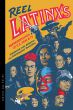
Reel Latinxs (2019)
Representation in U.S. Film and TV
by Frederick Luis Aldama and Christopher González
Subject: Sociology
Orienting Italy (2023)
China through the Lens of Italian Filmmakers
Victims, Perpetrators and Professionals (2021)
The Representation of Women in Chinese Crime Films
by Tingting Hu
Film and the Chinese Medical Humanities (2021)
Dir. Vivienne Lo, Chris Berry and Guo Liping
 Back
Back