

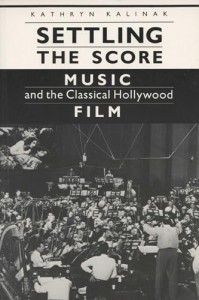
Settling the Score
Music and the Classical Hollywood Film


 (0 vote)
Average rating:
| 0 | rating |  = We can do without = We can do without |
| 0 | rating |  = Good book = Good book |
| 0 | rating |  = Excellent book = Excellent book |
| 0 | rating |  = Unique / a reference = Unique / a reference |
Your rating: -
Book Presentation:
"Music in film may seem incidental, but Kalinak shows its extreme importance as both 'articulator of screen expression and initiator of spectator response.' Who can forget the theme from Jaws, which turned a peaceful ocean scene into a threatening nightmare? . . . This major work on scoring goes a long way toward proving the importance of music in film."
—Library Journal
"Settling the Score is intended for general readers with minimal technical musical and contemporary theoretical skills. [Kalinak's] goal is, in fact, to 'settle the score' between the cinematic visual and aural, to promote music as an equal partner to the visual. In order to do so she provides a brief but illuminating historical summary of sound and music in film. Kalinak's strongest sections include a detailed discussion of the differences between music for silent films and sound films, and analyses of several different stylistic approaches toward musical composition in the Classical Hollywood film."
—Bill Thornhill, Hitchcock Annual
Beginning with the earliest experiments in musical accompaniment carried out in the Edison Laboratories, Kathryn Kalinak uses archival material to outline the history of American music and film. Focusing on the scores of several key composers of the sound era, including Erich Wolfgang Korngold's Captain Blood, Max Steiner's The Informer, Bernard Herrmann's The Magnificent Ambersons, and David Raksin's Laura, Kalinak concludes that classical scoring conventions were designed to ensure the dominance of narrative exposition. Her analyses of contemporary work such as John Williams' The Empire Strikes Back and Basil Poledouris' RoboCop demonstrate how the traditions of the classical era continue to influence scoring practices today.
Kathryn Kalinak is professor of English and film studies at Rhode Island College and has published many articles on film sound.
> From the same author:
> On a related topic:
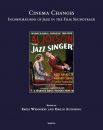
Cinema Changes (2019)
Incorporations of Jazz in the Film Soundtrack
Dir. Emile Wennekes and Emilio Audissino
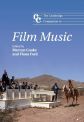
The Cambridge Companion to Film Music (2017)
Dir. Mervyn Cooke and Fiona Ford
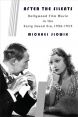
After the Silents (2014)
Hollywood Film Music in the Early Sound Era, 1926-1934
Beyond the Soundtrack (2007)
Representing Music in Cinema
Dir. Daniel Goldmark, Lawrence Kramer and Richard Leppert
 Back
Back