

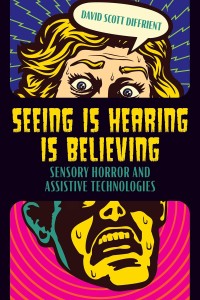
Seeing Is Hearing Is Believing
Sensory Horror and Assistive Technologies


 (0 vote)
Average rating:
| 0 | rating |  = We can do without |
| 0 | rating |  = Good book |
| 0 | rating |  = Excellent book |
| 0 | rating |  = Unique / a reference |
Your rating: -
Book Presentation:
Diffrient's strikingly original work mounts an intersensorial critique of the horror film, bringing disability studies, affect theory, and phenomenology together to evaluate how assistive technologies, such as audio description and subtitles for deaf and hard-of-hearing audiences, become sites for interrogating embodied experiences of cinematic spectatorship. Exploring a broad range of case studies, from Carnival of Souls (1962) to Exorcist II: The Heretic (1977) and Scream VI (2023), this book questions how audiovisual features unique to the motion picture medium implicate perceptions of touch, taste, and smell and serve as a principal way for people to establish belief in otherwise unbelievable phenomena. Longtime horror fans as well as newcomers to the genre will find much to savor in this eye-opening―and ear-opening―intervention in contemporary media culture.
> From the same author:

Movie Minorities (2021)
Transnational Rights Advocacy and South Korean Cinema
Movie Migrations (2015)
Transnational Genre Flows and South Korean Cinema


> On a related topic:

Terrors of the Flesh (2020)
The Philosophy of Body Horror in Film


Transforming Faces for the Screen (2023)
Horror and Romance in the 1920s
by Karen Randell and Alexis Weedon
Subject: Silent Cinema
Ad Nauseam (2026)
Newsprint Nightmares from the '70s and '80s
 Back


