


Staging Nuremberg
How the United States and the Soviet Union Fought Over the Portrayal of Nazi Crimes

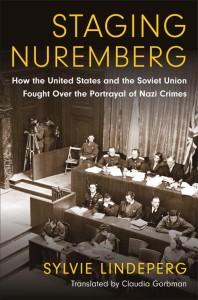

 (0 vote)
Average rating:
| 0 | rating |  = We can do without = We can do without |
| 0 | rating |  = Good book = Good book |
| 0 | rating |  = Excellent book = Excellent book |
| 0 | rating |  = Unique / a reference = Unique / a reference |
Your rating: -
Book Presentation:
As victory in World War II drew near, the Allies decided to hold a major trial of Nazi leaders, which began in Nuremberg in November 1945. Conflict soon broke out between the United States and the Soviet Union over not only how to assess German guilt but also how to depict the trial. The Americans saw it as a judicial and media spectacle that would convey “the greatest moral tale ever told,” illustrated with Hollywood techniques. The Soviets, for their part, drew on extensive experience filming show trials to craft their own narrative of the tribunal.
Sylvie Lindeperg offers a pioneering account of the cinematic stagecraft, storytelling, and imagery of the Nuremberg trials, revealing how film was used both as legal evidence and as a propaganda tool. She follows the American campaign to influence world opinion before, during, and after the trial, on stage and behind the scenes. Lindeberg chronicles how the hope of scripting a Hollywood-style courtroom drama crumbled amid rising geopolitical tensions and the mundane reality of the tribunal. The book interweaves in-depth reconstruction of the filming of the trial with portraits of the colorful characters who played leading or supporting roles. Drawing on American, British, Soviet, French, and German archives as well as analysis of films, newsreels, and photographs, Staging Nuremberg is a revelatory study of the theater of justice.
About the Author:
Sylvie Lindeperg is professor of history at the University of Paris 1 Panthéon–Sorbonne. She is the author of prizewinning books in French and the codirector or cowriter of documentary films. Her books in English translation include “Night and Fog”: A Film in History (2014).Claudia Gorbman is professor emerita of film studies at the University of Washington, Tacoma, and has translated several books by Michel Chion.
Press Reviews:
"Lindeperg’s magisterial history of the International Military Tribunal demonstrates how justice and cinema emerge from the push and pull of documentary proof and dramatic stagecraft. Gripping, deftly constructed, and meticulously researched, Staging Nuremberg provides a much-needed analysis of the complex ways moving images give form to evidence." -- Sam Di Iorio, Hunter College and The Graduate Center, CUNY
"Staging Nuremberg presents a pathbreaking account of the struggle between American jurists and their Soviet counterparts over the use of film at Nuremberg. In so doing, it offers a fascinating meditation on how film serves both as documentary evidence in landmark prosecutions and as a vehicle through which conceptions of justice and memories of historic trials are constructed." -- Lawrence Douglas, author of The Criminal State: War, Atrocity, and the Dream of International Justice
"With narrative flair, rigorous research, and unwavering focus, Lindeperg fleshes out in detail the Allies’ decision process―their steps and missteps―in staging the Nuremberg Trials. An essential work on the role of documentary in writing contemporary history, this book reconstructs the minute fragility and sense of opportunity felt by Americans and Soviets as they exerted their national and historical mission through film on the cusp of the Cold War." -- Ivone Margulies, author of In Person: Reenactment in Postwar and Contemporary Cinema
> From the same author:
> On a related topic:

Reclaiming Popular Documentary (2021)
by Christie Milliken and Steve F. Anderson
Subject: Genre > Documentary
Killer Images (2013)
Documentary Film, Memory, and the Performance of Violence
Dir. Joram ten Brink and Joshua Oppenheimer
Subject: Genre > Documentary
Men, War and Film (2022)
The Calling Blighty Films of World War II
by Steve Hawley
Subject: Genre > Documentary
Cinema on the Front Line (2021)
British Soldiers and Cinema in the First World War
Subject: Genre > Documentary
Celluloid War Memorials (2016)
The British Instructional Films Company and the Memory of the Great War
Subject: Genre > Documentary
 Back
Back

