

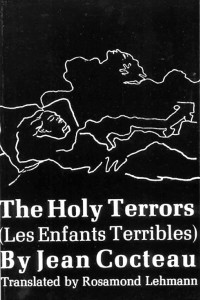
The Holy Terrors
(Les Enfants terribles)
by Jean Cocteau


 (0 vote)
Average rating:
| 0 | rating |  = We can do without = We can do without |
| 0 | rating |  = Good book = Good book |
| 0 | rating |  = Excellent book = Excellent book |
| 0 | rating |  = Unique / a reference = Unique / a reference |
Your rating: -
Book Presentation:
Cocteau's novel Les Enfants Terribles, which was first published in 1929, holds an undisputed place among the classics of modern fiction.
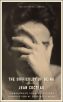
Written in a French style that long defied successful translation―Cocteau was always a poet no matter what we was writing―the book came into its own for English-language readers in 1955 when this translation was completed by Rosamund Lehmann. It is a masterpiece of the art of translation of which the Times Literary Supplement said: "It has the rare merit of reading as though it were an English original." Lehrmann was able to capture the essence of Cocteau's strange, necromantic imagination and to bring fully to life in English his story of a brother and sister, orphaned in adolescence, who build themselves a private world out of one shared room and their own unbridled fantasies. What started in games and laughter because for Paul and Elisabeth a drug too magical to resist. The crime which finally destroys them has the inevitability of Greek tragedy. Illustrated with twenty of Cocteau's own drawings.
About the Author:
Jean Cocteau (1889–1963) was a French writer, poet, designer, draftsman, sculptor, filmmaker, and boxing manager. His list of friends―including New Directions’ founder James Laughlin―would read like a catalog of the stars of the twentieth-century avant-garde. He died of a heart attack after being informed of the death of his friend, the singer Edith Piaf.Rosamond Nina Lehmann (1901 – 1990) was a British novelist.
Press Reviews:
"The lasting feeling that his work leaves is one of happiness; not of course in the sense that it excludes suffering, but because, in it, nothing is rejected, resented, or regretted."
― W.H. Auden
"One of the master craftsmen."
― Tennessee Williams
See The Terrible Children (1950) on IMDB ...
> From the same author:

The Art of Cinema (2000)
A Collection of Cocteau's Writings on Film
by Jean Cocteau
Subject: Director > Jean Cocteau
Three screenplays (1972)
Orpheus, The Eternal Return, Beauty and the Beast
by Jean Cocteau
Subject: One Film > The Eternal Return, Orpheus, Beauty and the Beast
Cocteau on the film (1972)
Conversations with Jean Cocteau
by Jean Cocteau
Subject: Director > Jean Cocteau
Professional Secrets (1970)
An Autobiography of Jean Cocteau
by Jean Cocteau
Subject: Director > Jean Cocteau
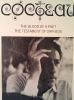
Two Screenplays (1968)
The Blood of a Poet / The Testament of Orpheus
by Jean Cocteau
Subject: One Film > The Blood of a Poet, Testament of Orpheus
> On a related topic:

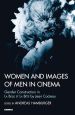
Women and Images of Men in Cinema (2015)
Gender Construction in La Belle et la Bete by Jean Cocteau
Dir. Andreas Hamburger
Subject: One Film > Beauty and the Beast
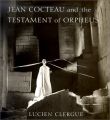
Jean Cocteau and The Testament of Orpheus (2001)
Subject: One Film > Testament of Orpheus
Jean Cocteau and His Films of Orphic Identity (1975)
Subject: One Film > Testament of Orpheus, Orpheus

On the Uses of the Fantastic in Modern Theatre (2008)
Cocteau, Oedipus, and the Monster
Subject: Director > Jean Cocteau
 Back
Back

