


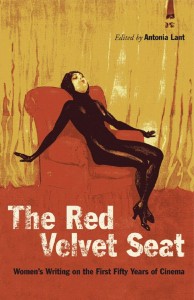
Red Velvet Seat
Women's Writings on the First Fifty Years of Cinema
Sous la direction de Antonia Lant


 (0 vote)
Moyenne des votes :
| 0 | vote |  = On peut s'en passer = On peut s'en passer |
| 0 | vote |  = Bon livre = Bon livre |
| 0 | vote |  = Excellent livre = Excellent livre |
| 0 | vote |  = Unique / une référence = Unique / une référence |
Votre vote : -
Description de l'ouvrage:
As viewers, actresses, directors and writers, women were centrally involved in cinema throughout the first half of the twentieth centuryindeed film-going was the most important way in which women participated in the era’s urban mass culture. However, the significance of women’s early contributions has until now remained scant and dispersed, eclipsed in historical opinion formed through the texts of men.
In magisterial scale Red Velvet Seat restores this film culture to visibility, using women’s written accounts from the beginnings up to 1950 to understand the significance of cinema for them. Sources include fashion and parenting magazines, newspapers and literary journals, memoirs and etiquette guides, while contributors range from novelists such as Virginia Woolf, Colette and Rebecca West to psychoanalysts, poets, social reformers, labor organizers, film editors, screen beauties, and race activists. For each section, Antonia Lant and Ingrid Periz provide an introduction, explaining the historical context and linking their themes to the major social and political movements of their time, as well as to more traditionally feminine concerns.
Compendious and absorbing, Red Velvet Seat is an invaluable contribution to the history of cinema.
À propos de l'auteur :
Djuna Barnes (1892–1982) was born in Cornwall-on-Hudson, NY, and worked as a journalist in New York before leaving the country to spend many years in Paris and London. She returned to New York in 1941, and lived in Greenwich Village until her death.Born in California in 1893, Anita Loos was herself a celebrity of the Jazz Age that produced Lorelei Lee. She began writing movie scripts by the time she was twelve, and before her death in 1981 she had written an enormous number of stories, screenplays, and more. She was also the author of an autobiography, A Girl Like I.
> Sur un thème proche :
Universal Women (2010)
Filmmaking and Institutional Change in Early Hollywood
The Othering of Women in Silent Film (2023)
Cultural, Historical, and Literary Contexts
Sujet : Silent Cinema
The Silent Feminists (2022)
America's First Women Directors, Rowman & Littlefield Edition
Sujet : Silent Cinema
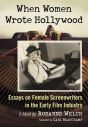
When Women Wrote Hollywood (2018)
Essays on Female Screenwriters in the Early Film Industry
Dir. Rosanne Welch
Sujet : Silent Cinema
Women in Medicine in Nineteenth-Century American Literature (2018)
From Poisoners to Doctors, Harriet Beecher Stowe to Theda Bara
Sujet : Silent Cinema

Movie-Struck Girls (2000)
Women and Motion Picture Culture After the Nickelodeon
Sujet : Silent Cinema
The Women Who Built Hollywood (2023)
12 Trailblazers in Front of and Behind the Camera
Sujet : History of Cinema
Hollywood (2019)
Her Story, An Illustrated History of Women and the Movies
de Jill Tietjen et Barbara Bridges
Sujet : History of Cinema
 Retour

