


The Earth Is Evil



 (0 vote)
Moyenne des votes :
| 0 | vote |  = On peut s'en passer = On peut s'en passer |
| 0 | vote |  = Bon livre = Bon livre |
| 0 | vote |  = Excellent livre = Excellent livre |
| 0 | vote |  = Unique / une référence = Unique / une référence |
Votre vote : -
Description de l'ouvrage:
The Earth Is Evil examines the connection between subjectivity and lack, arguing for a destituent ecology that sees lack as the universalist core of social, political, and environmental struggles. Steven Swarbrick maintains that psychoanalysis does not simply help us integrate our desires into a constituency of multispecies actors. Instead, psychoanalysis destitutes our fantasies of ecological and psychic wholeness. That destitution, he argues, is the unconscious source of our enjoyment. Exploring films by Lars von Trier, Kelly Reichardt, Daniel Kwan, and Daniel Scheinert, among others, and intervening in trenchant debates about negativity and desire, Swarbrick urges a return to the existentialist subject of lack against the flattening of subjectivity by ecocriticism. The Earth Is Evil is a vigorous attempt to construct a leftist environmental movement in dialogue with the most radical currents of critical theory.
À propos de l'auteur :
Steven Swarbrick is an associate professor of English at Baruch College, City University of New York. He is the author of The Environmental Unconscious: Ecological Poetics from Spenser to Milton and coauthor, with Jean-Thomas Tremblay, of Negative Life: The Cinema of Extinction.
Revue de Presse:
"As the world slides deeper into climate crisis, Steven Swarbrick boldly proclaims that we are still not yet thinking ecologically. The Earth Is Evil tackles our melancholic world of biodiversity loss, overflowing islands of waste, and calls for divestment from fossil fuels. Swarbrick’s wager: There is no organic whole to recover, the earth is evil, and it is our planet to lose. There is no better cinematic guide to the end of the world—and if we’re lucky, perhaps, the start of something else."—Andrew Culp, author of A Guerrilla Guide to Refusal
"A timely intervention in the field of environmental humanities, The Earth Is Evil offers a new way of apprehending the ongoing ecological catastrophe. Instead of melancholically yearning for the lost wholeness of the living world, Steven Swarbrick suggests that we fully recognize loss. Swarbrick’s use of film enables him to offer a genuine psychoanalysis of the Anthropocene, an eco-analysis of our troubled collective psyche."—Frédéric Neyrat, author of The Unconstructable Earth: An Ecology of Separation
Voir le site internet de l'éditeur University of Nebraska Press
> Du même auteur :
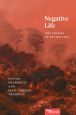
Negative Life (2024)
The Cinema of Extinction
de Steven Swarbrick et Jean-Thomas Tremblay
Sujet : Sociology
> Sur un thème proche :
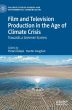
Film and Television Production in the Age of Climate Crisis (2022)
Towards a Greener Screen
Dir. Pietari Kääpä et Hunter Vaughan
Sujet : General
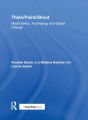
Think/Point/Shoot (2016)
Media Ethics, Technology and Global Change
Dir. Annette Danto, Mobina Hashmi et Lonnie Isabel
Sujet : General
River Delta Futures (2026)
Endangered Communities in Audiovisual Media
Dir. Francisco-J. Hernández Adrián et Angelos Theocharis
Sujet : Sociology
Elemental World Cinema (2025)
Cinematic Entanglements of Earth, Fire, Water and Air
Dir. Tiago de Luca et Matilda Mroz
Sujet : Sociology

 Retour

