


Cinematic Urban Geographies
Edited by François Penz and Richard Koeck

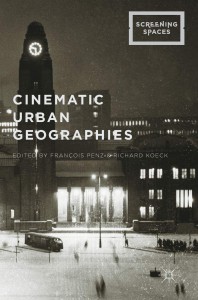

 (0 vote)
Average rating:
| 0 | rating |  = We can do without = We can do without |
| 0 | rating |  = Good book = Good book |
| 0 | rating |  = Excellent book = Excellent book |
| 0 | rating |  = Unique / a reference = Unique / a reference |
Your rating: -
Book Presentation:
This book proposes new methodological tools and approaches in order to tease out and elicit the different facets of urban fragmentation through the medium of cinema and the moving image, as a contribution to our understanding of cities and their topographies. In doing so it makes a significant contribution to the literature in the growing field of cartographic cinema and urban cinematics, by charting the many trajectories and points of contact between film and its topographical context. Under the influence of new technologies, the opening and the availability of previously unexplored archives but also the contribution of new scholars with novel approaches in addition to new work by experienced academics, Cinematic Urban Geographies demonstrates how we can reread the cinematic past with a view to construct the urban present and anticipate its future.
About the authors:
François Penz is Director of The Martin Centre for Architectural and Urban Studies, UK. He is an architect by training and Professor of Architecture and the Moving Image where he directs the Digital Studio for Research in Design, Visualization and Communication. He has written widely on issues of cinema, architecture and the city and is the author of Cinematic Aided Design: The Architecture of Everydayness.Richard Koeck is Professor and Chair in Architecture and the Visual Arts in the Liverpool School of Architecture, UK and is Director of the Centre for Architecture and the Visual Arts (CAVA). With a professional background in architectural design and filmmaking, his work is often methodologically underpinned by techniques that bridge analogue and digital culture, such as digital film, GIS mapping and locative media. He published widely on the theoretical and practical intersections of architecture, cities and visual culture, including CineScapes: Cinematic Spaces in Architecture and Cities.
> From the same authors:
The Everyday in Visual Culture (2022)
Slices of Lives
Dir. François Penz and Janina Schupp
Subject: Sociology
Urban Cinematics (2011)
Understanding Urban Phenomena through the Moving Image
Dir. François Penz and Andong Lu
Subject: Sociology
> On a related topic:
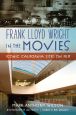
Frank Lloyd Wright in the Movies (2025)
Iconic California Sites on Film
Subject: Technique > Set Design
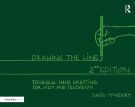
Drawing the Line (2023)
Technical Hand Drafting for Film and Television
Subject: Technique > Set Design


Screen Interiors (2021)
From Country Houses to Cosmic Heterotopias
Dir. Pat Kirkham and Sarah A. Lichtman
Subject: Technique > Set Design
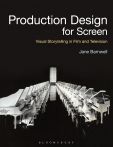
Production Design for Screen (2020)
Visual Storytelling in Film and Television
Subject: Technique > Set Design
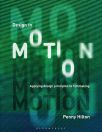
Design in Motion (2020)
Applying Design Principles to Filmmaking
by Penny Hilton
Subject: Technique > Set Design
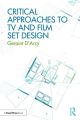
Critical Approaches to TV and Film Set Design (2018)
Subject: Technique > Set Design

The Art of the Hollywood Backdrop (2016)
by Richard M. Isackes and Karen L. Maness
Subject: Technique > Set Design
Film Architecture and the Transnational Imagination (2007)
Set Design in 1930s European Cinema
by Tim Bergfelder, Sue S. Harris and Sarah Street
Subject: Technique > Set Design
 Back
Back

