


Frank Lloyd Wright in the Movies
Iconic California Sites on Film

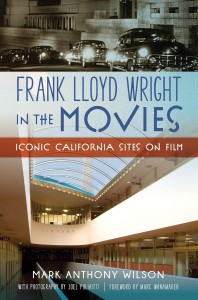

 (0 vote)
Average rating:
| 0 | rating |  = We can do without = We can do without |
| 0 | rating |  = Good book = Good book |
| 0 | rating |  = Excellent book = Excellent book |
| 0 | rating |  = Unique / a reference = Unique / a reference |
Your rating: -
Book Presentation:
What do Vincent Price, Harrison Ford, Jackie Chan, and Uma Thurman all have in common with Frank Lloyd Wright? Answer: The Movies.
The influence of Frank Lloyd Wright on architecture can’t be overstated, and his unique creations have also left a lasting impression on movie audiences.
From the Marin County Civic Center’s starring role in George Lucas’s first feature film to the famous Ennis House appearing in multiple movies, eight of Wright’s California buildings have served as dramatic settings for stories about power, wealth and dystopian futures. Inspiring generations of filmmakers, these sites―both public and private―remain some of the most iconic places captured on film. With behind-the-scenes production facts and a peek into Wright’s design process, author Mark Anthony Wilson recounts the legacy of Frank Lloyd Wright’s architecture in the movies.
This book features:
• 120 color and black and white images, including scenes from popular Hollywood films such as Blade Runner, Black Rain and A Summer Place, as well as cult favorites like House on Haunted Hill, Permanent Midnight, and Cannibal Women in The Avocado Jungle of Death.
• Little known facts about how Frank Lloyd Wright's work influenced Alfred Hitchcock and about Wright's friendship with Walt Disney and his comments about some of Disney's most famous films.
• Detailed information about how to visit those Frank Lloyd Wright buildings in this book that are open to the public.
• The controversies created by several of these films that caused members of some audiences to leave the theater in moral outrage and caused other audiences to scream in horror.
• Behind-the-scenes comments by Hollywood directors and producers about why they chose to use Frank Lloyd Wright buildings or design features in their films.
• A look at how Frank Lloyd Wright's design philosophy influenced the style of Hollywood films and how some of his strong-willed female clients got him to change the design of their homes.
• Why Frank Lloyd Wright was accused of being a "communist sympathizer" and "un-American" near the end of his career, and why this nearly derailed the construction of one of his most famous buildings.
About the Author:
Mark Anthony Wilson is an architectural historian who has been writing and teaching about historic buildings for more than forty years. He has a master’s degree in history and media from California State University, East Bay. He has taught courses on art history, film history and architecture for colleges and universities throughout Northern California and has authored five previous books on West Coast historic architecture. Mark lives with his wife, Ann Johnson, and daughter, Elena, in Berkeley, California.
Press Reviews:
"How Frank Lloyd Wright’s Bay Area buildings became Hollywood stars ― and where to see them"―San Francisco Chronicle
"...details how movie directors captured the famous architect's building, from "Blade Runner" to "Rush Hour."―The Mercury News
> On a related topic:

Critical Approaches to TV and Film Set Design (2018)
Subject: Technique > Set Design
Cinéma, architecture, dispositif (2011)
Dir. Elena Biserna and Precious Brown
(in French and English)
Subject: Technique > Set Design
Cinema & Architecture (1998)
Méliès, Mallet-Stevens, Multimedia
Collective
Subject: Technique > Set Design
Drawing the Line (2023)
Technical Hand Drafting for Film and Television
Subject: Technique > Set Design
Screen Interiors (2021)
From Country Houses to Cosmic Heterotopias
Dir. Pat Kirkham and Sarah A. Lichtman
Subject: Technique > Set Design
 Back
Back

