


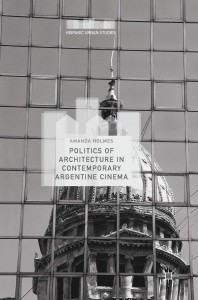
Politics of Architecture in Contemporary Argentine Cinema


 (0 vote)
Average rating:
| 0 | rating |  = We can do without = We can do without |
| 0 | rating |  = Good book = Good book |
| 0 | rating |  = Excellent book = Excellent book |
| 0 | rating |  = Unique / a reference = Unique / a reference |
Your rating: -
Book Presentation:
This book considers how architectural landmarks, imagined buildings and urban landscapes take part in the production of meaning in contemporary Argentine cinema. From the iconic Buenos Aires Obelisk to the Hilton International Hotel, the shopping center to the café and the Le Corbusier-designed Curutchet House to the gated community, architecture in these films evokes the political. Tracing architecture’s expression through six films produced since the 1990s―Pizza birra faso, Mundo grúa, Nueve reinas, La niña santa, La antena and El hombre de al lado―Amanda Holmes studies how architecture in cinema elicits political memory, underscores marginalization and class discrepancies, creates nostalgia for neighborhoods and re-evaluates existing communities. Generously illustrated and carefully researched, the book offers an in-depth reading of key contemporary Argentine films and a fresh architectural approach to film analysis.
About the Author:
Amanda Holmes is Associate Professor of Latin American literature and film at McGill University, Canada. She is author of City Fictions: Language, Body and Spanish American Urban Space (2007) and co-editor of Cultures of the City: Mediating Identities in Urban Latin/o America (2010).
Press Reviews:
"Amanda Holmes offers a thorough and detailed analysis of six Argentine films, focusing particularly on the architectonic sites (and/or spaces) represented in the films; their history; their relationship with the films’ plot and aesthetics; and their political, economic, social, and cultural meanings in the context of these films. The visual analysis is indeed outstanding, and the arguments created in relation to these films are enlightening and stimulating." (Gabriela Copertari, Case Western Reserve University, USA)
> On a related topic:

World Film Locations / Buenos Aires (2014)
Dir. Santiago Oyarzabal and Michael Pigott
Fictions of the Real (2026)
Synergies Between Screen and Stage in Argentine Performance
by Brenda Werth

Contemporary Argentine Women Filmmakers (2023)
Dir. Mirna Vohnsen and Daniel Mourenza

Hear Me with Your Eyes (2022)
Women, Visions, and Voices in Argentine Cinema

Picturing Argentina (2022)
Myths, Movies, and the Peronist Vision


Nation, Culture and Class in Argentine Cinema (2020)
Crisis and Representation (1998-2005)
Rethinking Testimonial Cinema in Postdictatorship Argentina (2019)
Beyond Memory Fatigue

Blood Circuits (2019)
Contemporary Argentine Horror Cinema
 Back
Back

