


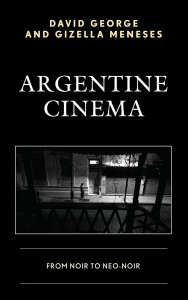
Argentine Cinema
From Noir to Neo-Noir
by David George and Gizella Meneses


 (0 vote)
Average rating:
| 0 | rating |  = We can do without = We can do without |
| 0 | rating |  = Good book = Good book |
| 0 | rating |  = Excellent book = Excellent book |
| 0 | rating |  = Unique / a reference = Unique / a reference |
Your rating: -
Book Presentation:
Argentine Cinema: From Noir to Neo-Noir examines the phenomenon of Argentine film noir. Beginning with definitions of film noir and its international iterations, the book presents a history of the development of film noir and neo-noir in Argentina (from the 1940s to the present), as well as a technical, aesthetic, and socio-historical analysis of such recent Argentine neo-noir films as The Aura, The Secret in Their Eyes, and The German Doctor. It considers the question of inscription of such classic noirs as Double Indemnity and The Third Man and looks forward to future scholarly work on other Latin American noir and neo-noir films, especially those produced in Mexico and Brazil.
About the authors:
David George is Professor Emeritus of English Literature at Urbana University, Ohio, USA
Press Reviews:
"Argentine Cinema: From Noir to Neo-Noir is an informative read that is both enlightening and interesting. As a reader you are well convinced by the book’s conclusion that noir isn’t a phenomenon unique to just Hollywood, but is an international phenomenon due to the authors’ well presented argument." ―Film Matters
"Theorist-filmmaker Paul Schrader’s influential claim that the film noir phenomenon is unique to Hollywood and reflects a specific period in US history―mid-1940s to late 1950s―provides the point of departure for this volume. Via close readings, George and Meneses (both, Lake Forest College) seek to prove that selected Argentine features are best considered full-fledged noirs or neo-noirs. Their aim, as they write in the conclusion, is to "demonstrate the cultural cross-fertilization in noir through intertextual perspectives, stylistic schema, and narrative and cinematic tropes." The authors generally succeed. Examining features covering a chronological ranging from 1946 (The Naked Angel) to 2013 (The German Doctor), George and Meneses offer detailed, perceptive readings of individual shots and sequences; they are particularly astute in their analyses of specific elements of craft, such as cinematography and production design. They also provide all-important sociohistorical contextualization to help readers better understand the themes of the films. The research is wide ranging and up-to-date, and influences and sources are indicated. The volume is clearly structured. . . This study is an important addition to understanding the international dimensions of film noir.
Summing Up: Recommended. Upper-division undergraduates through faculty." ―Choice Reviews
"This book provides a useful introduction to noir and neo-noir filmmaking in the Argentine context. It will be extremely valuable for college students seeking a concise and well-focused survey of the field. A real strength is its incisive analyses of individual shots and sequences, brought together with a strong sense of the enduring relevance and adaptability of noir themes and aesthetics. The clarity and coherence of this study would also make it very suitable for a general reader interested in noir film or Argentine cinema." ―Joanna Page, University of Cambridge
"Argentine Cinema: From Noir to Neo-noir is the first serious exploration of Argentine film noir as it fits within the broader framework of international noir studies. An easily readable yet thorough analysis of key neo and retro noir films richly illustrated by classic examples, Argentine Cinema:From Noir to Neo-noir is a valuable resource for scholars, students, and fans of film noir and Argentine culture." ―Victoria Ruétalo, University of Alberta
> On a related topic:
Fictions of the Real (2026)
Synergies Between Screen and Stage in Argentine Performance
by Brenda Werth
Contemporary Argentine Women Filmmakers (2023)
Dir. Mirna Vohnsen and Daniel Mourenza
Hear Me with Your Eyes (2022)
Women, Visions, and Voices in Argentine Cinema

Picturing Argentina (2022)
Myths, Movies, and the Peronist Vision


Nation, Culture and Class in Argentine Cinema (2020)
Crisis and Representation (1998-2005)
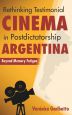
Rethinking Testimonial Cinema in Postdictatorship Argentina (2019)
Beyond Memory Fatigue
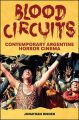
Blood Circuits (2019)
Contemporary Argentine Horror Cinema
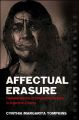
Affectual Erasure (2019)
Representations of Indigenous Peoples in Argentine Cinema
 Back
Back

