

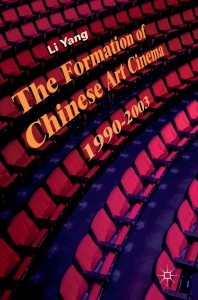
The Formation of Chinese Art Cinema
1990–2003
by Li Yang


 (0 vote)
Average rating:
| 0 | rating |  = We can do without = We can do without |
| 0 | rating |  = Good book = Good book |
| 0 | rating |  = Excellent book = Excellent book |
| 0 | rating |  = Unique / a reference = Unique / a reference |
Your rating: -
Book Presentation:
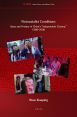
The Formation of Chinese Art Cinema: 1990–2003 examines the development of Chinese art film in the People’s Republic of China from 1990, when the first Sixth Generation film Mama was released, to 2003, when authorities acknowledged the legitimacy of underground filmmakers. Through an exploration of the production and consecration mechanisms of the new art wave and its representative styles, this book argues that the art wave of the 1990s fundamentally defined Chinese art cinema. In particular, this vital art wave was not enabled by democratic liberalism, but by the specific industrial development, in which the film system transitioned from Socialist propaganda into a commercialized entity. Allowing Chinese art film to grow but at the same time denying its legitimacy, this paradoxical transition process shaped Chinese art film’s institutional and aesthetical alternative positioning, which eventually helped consolidate the art wave into art cinema. Ultimately, this bookis a history of the Chinese portion of global art cinema, which also reveals the complex Chinese cultural experiences during the Reform Era.
About the Author:
Li Yang is Assistant Professor of Chinese in the Department of Foreign Languages and Literatures and the Program of Asian Studies at Lafayette College, USA.
Press Reviews:
"The Formation of Art Cinema in China is an important intervention that sheds new light on contemporary Chinese cinema. Li Yang innovatively combines analysis of critical discourses and industrial practices by approaching cinema as a Bourdieuian field. Cutting across conventional divisions between independent and mainstream, she reveals how Chinese filmmakers have drawn inspiration from New Waves around the world and gone on to develop Chinese art cinema’s own distinct character." (Chris Berry, Professor of Film Studies, King’s College London, UK)
> On a related topic:
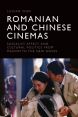
Romanian and Chinese Cinemas (2025)
Socialist Affect and Cultural Politics from Maoism to the New Waves
by Lucian Țion
Chinese Film in the Twenty-First Century (2025)
Movements, Genres, Intermedia
Dir. Corey Schultz and Cecília Mello
Cinematically Rendering Confucius (2025)
Chinese Film Philosophy and the Efficacious Screen-Play
Ecological And Environmental Turns (2025)
(Re)mapping China's Sociocultural Landscape through Ecocinema
by Shuqin Cui
 Back
Back