


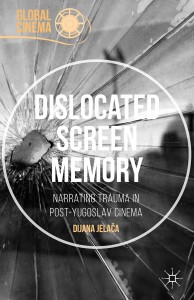
Dislocated Screen Memory
Narrating Trauma in Post-Yugoslav Cinema


 (0 vote)
Average rating:
| 0 | rating |  = We can do without = We can do without |
| 0 | rating |  = Good book = Good book |
| 0 | rating |  = Excellent book = Excellent book |
| 0 | rating |  = Unique / a reference = Unique / a reference |
Your rating: -
Book Presentation:
The links between cinema and war machines have long been established. This book explores the range, form, and valences of trauma narratives that permeate the most notable narrative films about the breakup of Yugoslavia.
About the Author:
Dijana Jela?a is Adjunct Professor in the Department of Rhetoric, Communication and Theater at St. John s University, USA.
Press Reviews:
"Dislocating Screen Memory offers an innovative approach to understanding the violence, gender-relations, and explicit and implicit war-memories that are reflected in the cinema of the Balkans. Jelača’s book is a well-structured, detailed work, a long-awaited contribution on post-war Yugoslav cinema and in general, the way memory and trauma intertwine on screen." (Anna Batori, Apparatus, Issue 7, 2018)
"Dislocated Screen Memory: Narrating Trauma in Post-Yugoslav Cinema (Palgrave 2016) is the first study that thematically gathers twenty-odd years of Balkan cinematography by giving an analytic voice to highly complex and sophisticated webs of traumatic representation. … The importance of the book lies not only inits fresh insights on the dominant tropes of representation that emerged in post-Yugoslav films … but also in its approach to trauma. … brings much needed attention to marginalized themes and marginalized films." (Dragana Obradovic, Balkanist, balkanist.net, May, 2016)
"Dislocated Screen Memory is a welcome addition to the growing literature on post-conflict cinema. Focusing on films from the countries of ex-Yugoslavia, the book deftly and delicately explores much contested affective and political terrain, making the reader see how the traumatic aftermath of a civil war all too easily blurs distinction between victims and perpetrators, as each side lays claim to victimhood. At once erudite and empathetic, the book makes an excellent case for the cinema as a factor for truth and an agent of testimony." - Thomas Elsaesser, author of German Cinema - Terror and Trauma: Cultural Memory Since 1945
> From the same author:
The Routledge Companion to Cinema & Gender (2018)
by Kristin Lené Hole, Dijana Jelača, E. Ann Kaplan and Patrice Petro
Subject: Sociology
> On a related topic:
Disintegration in Frames (2007)
Aesthetics and Ideology in the Yugoslav and Post-Yugoslav Cinema
by Pavle Levi
The Haunted Present (2026)
Slavic Neo-Noir Cinema and Television
Dir. Elena Prokhorova, Alexander Prokhorov and Rimgaila Salys
Work, Ideology, and Film under Socialism in Romania (2025)
Studies in the Sociology of Film
Stories between Tears and Laughter (2024)
Popular Czech Cinema and Film Critics
Albanian Cinema Through the Fall of Communism (2023)
Silver Screens and Red Flags
Cinema and the Environment in Eastern Europe (2023)
From Communism to Capitalism
Dir. Masha Shpolberg and Lukas Brasiskis
Cinema of Collaboration (2022)
DEFA Coproductions and International Exchange in Cold War Europe
 Back
Back

