


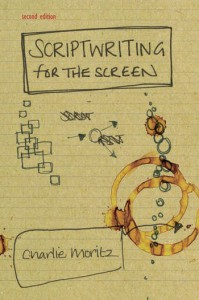
Scriptwriting for the Screen


 (0 vote)
Moyenne des votes :
| 0 | vote |  = On peut s'en passer = On peut s'en passer |
| 0 | vote |  = Bon livre = Bon livre |
| 0 | vote |  = Excellent livre = Excellent livre |
| 0 | vote |  = Unique / une référence = Unique / une référence |
Votre vote : -
Description de l'ouvrage:
'If I was setting out as a screenwriter, this is the book I would read first and keep by me'– Melanie Harris, Producer, Crosslab Productions
'An excellent resource for students and teachers alike'– In the Picture
'...a valuable addition to every screenwriting bookshelf' – Screentalk
'This is one of the best guides to help screenwriters think visually that I have ever read' – Creative Screenwriting
'The inventive exercises in Scriptwriting for the Screen give it the potential for revitalizing the experience of even experienced scriptwriters' – ' Scope’ Online Journal of Film Studies
Scriptwriting for the Screen is an accessible guide to writing for film and television. It details the first principles of screenwriting and advises on the best way to identify and formulate a story and develop ideas in order to build a vivid, animated and entertaining script.
Scriptwriting for the Screen introduces the reader to essential skills needed to write effective drama. This edition has been updated to include new examples and an entirely new chapter on adaptation. There are examples of scripts from a wide range of films and television dramas such as Heroes, Brokeback Mountain, Coronation Street, The English Patient, Shooting The Past, Spaced, Our Friends In the North and American Beauty.
Scriptwriting for the Screen includes:
advice on how to visualise action and translate this into energetic writing
how to dramatise writing, use metaphor and deepen meaning
tips on how to determine the appropriate level of characterisation for different types of drama
practical exercises and examples which help develop technique and style
a section on how to trouble-shoot and sharpen dialogue
a guide to further reading
À propos de l'auteur :
Charlie Moritz is a freelance scriptwriter who has written for both television and theatre. He teaches screenwriting at Manchester Metropolitan University and has also taught at the RITS School of Film and Television in Brussels.
> Sur un thème proche :
The Heart of Your Script (2026)
The Insider's Guide to Writing the Difficult Middle Section of a Screenplay
de Ted Wilkes et Phil Hughes
Sujet : Technique > Scriptwriting
Games Directors Play (2026)
Tricks and Stratagems of Cinematic Storytelling
Sujet : Technique > Scriptwriting
Integrated Storytelling by Design (2026)
Concepts, Principles and Methods for New Narrative Dimensions
Sujet : Technique > Scriptwriting
Rem Koolhaas as Scriptwriter (2025)
OMA Architecture Script for West Berlin
Sujet : Technique > Scriptwriting
Crafting Short Screenplays That Connect (2025)
Sujet : Technique > Scriptwriting
Beyond the Monoplot (2025)
How to Write Unconventional Films (and Why We Should)
de Chris Neilan
Sujet : Technique > Scriptwriting
Scriptnotes (2025)
A Book About Screenwriting and Things That Are Interesting to Screenwriters
de John August et Craig Mazin
Sujet : Technique > Scriptwriting
 Retour

