

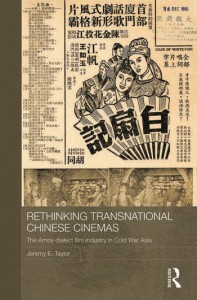
Rethinking Transnational Chinese Cinemas
The Amoy-Dialect Film Industry in Cold War Asia


 (0 vote)
Average rating:
| 0 | rating |  = We can do without = We can do without |
| 0 | rating |  = Good book = Good book |
| 0 | rating |  = Excellent book = Excellent book |
| 0 | rating |  = Unique / a reference = Unique / a reference |
Your rating: -
Book Presentation:
The Amoy-dialect film industry emerged in the 1950s, producing cheap, b-grade films in Hong Kong for direct export to the theatres of Manila Chinatown, southern Taiwan and Singapore. Films made in Amoy dialect - a dialect of Chinese - reflected a particular period in the history of the Chinese diaspora, and have been little studied due to their ambiguous place within the wider realm of Chinese and East Asian film history. This book represents the first full length, critical study of the origin, significant rise and rapid decline of the Amoy-dialect film industry.
Rather than examining the industry for its own sake, however, this book focuses on its broader cultural, political and economic significance in the region. It questions many of the assumptions currently made about the ‘recentness’ of transnationalism in Chinese cultural production, particularly when addressing Chinese cinema in the Cold War years, as well as the prominence given to ‘the nation’ and ‘transnationalism’ in studies of Chinese cinemas and of the Chinese Diaspora. By examining a cinema that did not fit many of the scholarly models of ‘transnationalism’, that was not grounded in any particular national tradition of filmmaking and that was largely unconcerned with ‘nation-building’ in post-war Southeast Asia, this book challenges the ways in which the history of Chinese cinemas has been studied in the recent past.
About the Author:
Jeremy E. Taylor is a lecturer in Chinese Studies at the School of East Asian Studies, University of Sheffield, UK.
Press Reviews:
"Jeremy Taylor has written a delightful book about the Hokkien-language cinema industry during the 1950s and early 1960s... Taylor has searched extraordinarily widely to obtain relevant material. In addition to reading extensively in the scholarly literature, he has conducted interviews, obtained much information from a broad variety of newspapers and trade journals, and visited and mined many archives. The very readable text has 17 photographs illustrating many of the book’s themes... For those interested in Overseas Chinese, Taiwan or Chinese cinema, this book is a gem!" - J. Bruce Jacobs, Monash University; The China Journal, No. 67
See the publisher website: Routledge
> On a related topic:
China through the Camera Lens (2024)
A Multimedia Reader for Advanced Chinese
by Shuqin Cui, Ying Gao, Hsin-hsin Liang and Julian K. Wheatley
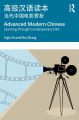
Advanced Modern Chinese 高级汉语读本 (2022)
Learning through Contemporary Film 当代中国电影赏析
Reorienting Chinese Stars in Global Polyphonic Networks (2021)
Voice, Ethnicity, Power
Celluloid China (2002)
Cinematic Encounters with Culture and Society
Early One Spring (2010)
An Intermediate Chinese Reader to Accompany the Film Video February
by Pilwun Shih Wang and Sarah Wang
Subject: One Film > Early Spring
Cinematic Landscapes (2000)
Observations on the Visual Arts and Cinema of China and Japan
Dir. Linda C. Ehrlich and David Desser
 Back
Back