


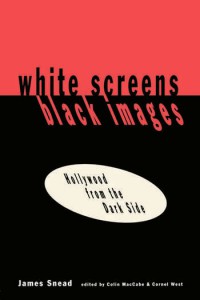
White Screens/Black Images
Hollywood From the Dark Side
by James Snead


 (0 vote)
Average rating:
| 0 | rating |  = We can do without = We can do without |
| 0 | rating |  = Good book = Good book |
| 0 | rating |  = Excellent book = Excellent book |
| 0 | rating |  = Unique / a reference = Unique / a reference |
Your rating: -
Book Presentation:
Hollywood's representation of blacks has been consistently misleading, promoting an artificially constructed mythology in place of historical fact. But how, James Snead asks, did black skin on screen develop into a complex code for various types of white supremacist discourse? In these essays, completed shortly before his death in 1989, James Snead offers a thoughtful inquiry into the intricate modes of racial coding in Hollywood cinema from 1915 to 1985. Snead presents three major methods through which the racist ideology within film functions: mythification, in which black images are correlated in a larger sceme of semiotic valuation where the dominant I needs the marginal other in order to function effectively; marking, in which the color black is repeatedly over-determined and redundantly marked, as if to force the viewer to register the image's difference from white; and omission--the repetition of black absence from positions of autonomy and importance. White Screens/Black Images offers an array of film texts, drawn from both classical Hollywood cinema and black independent film culture. Individual chapters analyze Birth of a Nation , King Kong , Shirley Temple in The Littlest Rebel and The Little Colonel , Mae West in I'm No Angel , Marlene Dietrich in Blonde Venus , Bette Davis in Jezebel , the racism of Disney's Song of the South , and Taxi Driver . Making skillful use of developments in both structuralist and post-structuralist film theory, Snead's work speaks not only to the centrality of race in Hollywood films, but to its centrality in the formation of modern American culture.
About the Author:
James Snead, Colin MacCabe, Cornel West
Press Reviews:
"...exciting contributions to the study of film in general and to issues of race and culture in particular." -- Yale Film News
See the publisher website: Routledge
> On a related topic:
A Piece of the Action (2019)
Race and Labor in Post–Civil Rights Hollywood
by Eithne Quinn
Subject: Sociology
Black Male Frames (2018)
African Americans in a Century of Hollywood Cinema, 1903-2003
by Roland Leander Williams Jr.
Subject: Sociology


Borderland Brutalities (2024)
Violence and Resistance Along the Us-Mexico Borderlands in Literature, Film, and Culture
Subject: Sociology
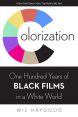
Colorization (2024)
One Hundred Years of Black Films in a White World
by Wil Haygood
Subject: Sociology

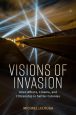
Visions of Invasion (2023)
Alien Affects, Cinema, and Citizenship in Settler Colonies
Subject: Sociology

Intersecting Aesthetics (2023)
Literary Adaptations and Cinematic Representations of Blackness
Dir. Charlene Regester, Cynthia Baron and Ellen C. Scott
Subject: Sociology
 Back
Back

