


South Asian Filmscapes
Transregional Encounters
Sous la direction de Elora Halim Chowdhury et Esha Niyogi De

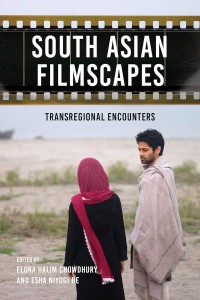

 (0 vote)
Moyenne des votes :
| 0 | vote |  = On peut s'en passer = On peut s'en passer |
| 0 | vote |  = Bon livre = Bon livre |
| 0 | vote |  = Excellent livre = Excellent livre |
| 0 | vote |  = Unique / une référence = Unique / une référence |
Votre vote : -
Description de l'ouvrage:
New political realities and shared histories connect film cultures across borders
In South Asia massive anticolonial movements in the twentieth century created nation-states and reset national borders, forming the basis for emerging film cultures. Following the upheaval of the partition of India and Pakistan in 1947 and the Bangladesh Liberation War of 1971, new national cinemas promoted and reinforced prevailing hierarches of identity and belonging. At the same time, industrial and independent cinemas contributed to remarkably porous and hybrid film cultures, reflecting the intertwining of South Asian histories and their reciprocal cultural influences. This cross-fertilization within South Asian cultural production continues today.
South Asian Filmscapes excavates these complex politics and poetics of bordered identity and crossings through selected histories of cinema in South Asia. Several essays reveal ways in which fixed notions of national identity have been destabilized by the cross-border mobility of filmed arts and practitioners, while others interrogate how filmic politics intersects with discourses of nationalism, sexuality and gender, religion, and language. Together, they offer a fluid approach to the multiple histories and encounters that conjure "South Asia" as a geographic and political entity in the region and globally through a cinematic imagination.
À propos des auteurs :
Elora Halim Chowdhury is professor of women's, gender, and sexuality studies at the University of Massachusetts Boston and author of Transnationalism Reversed: Women Organizing Against Gendered Violence in Bangladesh. Esha Niyogi De is a lecturer in English at UCLA and author of Empire, Media, and the Autonomous Woman: A Feminist Critique of Postcolonial Thought.
Revue de Presse:
"South Asian Filmscapes will become not only a standard reference but also one that we will use repeatedly in both graduate and undergraduate classrooms. It is, in short, a complete rethinking of the region using cinema and its mobility as the vantage for doing so."―Sangita Gopal, University of Oregon
"Will ignite a much-needed conversation for our times. The essays make a rich tapestry of intersecting as well as tensile lines of memory, affectations, and ideologies. It will be useful to scholars across disciplines in the humanities and social sciences."―Anustup Basu, University of Illinois at Urbana-Champaign
"This volume of incisive and bold essays opens a world of encounters and divisions between the connected and divided people of South Asia―creating new space for rethinking South Asia's past and shining a light for building trusting alliances in the future."―Yasmin Saikia, Arizona State University
Voir le site internet de l'éditeur University of Washington Press
> Des mêmes auteurs :
Women's Transborder Cinema (2024)
Authorship, Stardom and Filmic Labor in South Asia
Sujet : Countries > South Asia
Ethical Encounters (2022)
Transnational Feminism, Human Rights, and War Cinema in Bangladesh
Sujet : Countries > Southeast Asia
> Sur un thème proche :
Filming the Line of Control (2019)
The Indo–Pak Relationship through the Cinematic Lens
Dir. Meenakshi Bharat et Nirmal Kumar
Sujet : Countries > South Asia
Thinking Past ‘Post-9/11' (2023)
Home, Nation and Transnational Desires in Pakistani English Novels and Hindi Films
de Jayana Jain
Sujet : Countries > South Asia
Crossover Stars in the Hindi Film Industry (2020)
Globalizing Pakistani Identity
de Dina Khdair
Sujet : Countries > South Asia
The Indian Partition in Literature and Films (2019)
History, Politics, and Aesthetics
Dir. Rini Bhattacharya Mehta et Debali Mookerjea-Leonard
Sujet : Countries > South Asia
Partition Literature and Cinema (2020)
A Critical Introduction
Dir. Jaydip Sarkar et Rupayan Mukherjee
South Asia in Alternative Cinema(s) (2025)
Dir. Vivek Sachdeva, Hariprasad Athanickal et Chandrakant A. Langare
Sujet : Countries > South Asia
South Asian Creative and Cultural Industries (2024)
Dir. Khaleel Malik et Rajinder Dudrah
Sujet : Countries > South Asia
Media, Indigeneity and Nation in South Asia (2021)
Dir. Markus Schleiter et Erik de Maaker
Sujet : Countries > South Asia
New Feminisms in South Asian Social Media, Film, and Literature (2019)
Disrupting the Discourse
Dir. Sonora Jha et Alka Kurian
Sujet : Countries > South Asia
 Retour

