


The Magic Lantern at Work
Witnessing, Persuading, Experiencing and Connecting
Sous la direction de Martyn Jolly et Elisa deCourcy

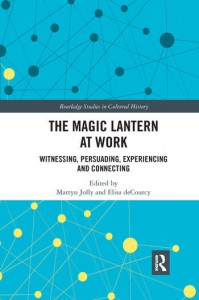

 (0 vote)
Moyenne des votes :
| 0 | vote |  = On peut s'en passer = On peut s'en passer |
| 0 | vote |  = Bon livre = Bon livre |
| 0 | vote |  = Excellent livre = Excellent livre |
| 0 | vote |  = Unique / une référence = Unique / une référence |
Votre vote : -
Description de l'ouvrage:
For centuries, various new media technologies have provided individuals with a set of powerful tools to affect their audiences. Among these the magic lantern show was perhaps the most pervasive, and persuasive. Around the world audiences gathered together in darkened rooms to see a sequence of projected images transition one into another as they listened to personal stories or scripted narrations. Through the power of the magic lantern audiences, for the first time, became the direct witnesses to distant, often traumatic, political events; they visually learned new scientific and medical knowledge, virtually experienced distant places, and collectively experienced strange, often uncanny, phenomena. Although relatively neglected until recently, the apparatus of the magic lantern is now receiving the attention it deserves from historians, curators and artists. Through a set of case studies focusing on the use of the magic lantern by very different, but equally fascinating individuals, a team of international scholars analyses the emerging power of the lantern show in the nineteenth and twentieth centuries within politics, religion, travel, science, health, marketing and entertainment. The magic lantern’s connections to today’s multimedia environments are explored through the intertwined themes of connecting, experiencing, witnessing and persuading.
À propos des auteurs :
Martyn Jolly is Honorary Associate Professor at the Australian National University School of Art and Design.Elisa deCourcy is Research Fellow at the Australian National University School of Art and Design.
> Sur un thème proche :
Film Audiences (2022)
Personal Journeys with Film
de Bridgette Wessels, Peter Merrington et Matthew Hanchard
Sujet : Sociology
A Companion to Motion Pictures and Public Value (2022)
Dir. Mette Hjort et Ted Nannicelli
Sujet : Sociology
Transcultural Images in Hollywood Cinema (2021)
Debates on Migration, Identity, and Finance
Dir. Ugur Baloglu et Yildiz Derya Birincioglu
Sujet : Sociology

 Retour

