


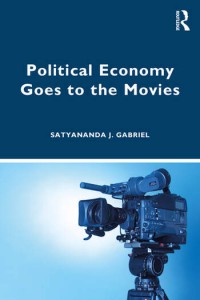
Political Economy Goes to the Movies


 (0 vote)
Average rating:
| 0 | rating |  = We can do without = We can do without |
| 0 | rating |  = Good book = Good book |
| 0 | rating |  = Excellent book = Excellent book |
| 0 | rating |  = Unique / a reference = Unique / a reference |
Your rating: -
Book Presentation:
Political Economy Goes to the Movies provides an introduction to political economy using a wide range of popular films and documentaries as the objects of analysis. The work helps readers to understand and analyze the economic and related political, cultural, and ecological relationships depicted in selected films. This is achieved through the lens of past and present economic theories and in the context of debates over the dynamic influence of economics on individual life chances.
Film may have more to teach us about the real world than the abstractions of certain economic theories. A world of income inequality, child labor in mills and mines, local rebellions against land seizures, and wars triggered by economic conflicts provide the context for many films mirroring real world events. Some films depict the interacting and intersecting political, economic, cultural, and ecological contexts within and between variant economic relationships, whereas other films show “catastrophes” such as economic depressions, disruptive social transitions, violent revolutions, and existential environmental degradation – a world in disequilibrium. Films allow us to see a panoply of human social relationships and related problems, even to explore cataclysmic moments in our species life, but not to necessarily see the why of these relationships and problems. Simultaneously, mainstream economics has severe constraints on what can be analyzed. Film exposes this weakness of the mainstream model. Twelve Years a Slave, Trumbo, The Big Short and others are analyzed for their realism by referencing documented historical social events, and behavioral economics provides further data for analyzing the realism of social interaction within the films.
Exploring events and contexts absent from the typical economics text or the basic level economics classes, this work is essential reading for students and scholars of political economy in both economics and politics departments, as well as those of pluralist economics and Marxist economics.
About the Author:
Satyananda J. Gabriel is Professor of Economics at Mount Holyoke College, USA.
Press Reviews:
"This is a superb interdisciplinary book. It contributes original insights into 'economics' drawn from the author's studies of film and critiques of mainstream economic theory. It exposes the ideologically loaded abstractions central to mainstream economics. And it also shows us how films both reflect and shape mainstream economics and its critiques. Brilliant, exceptional work."
—Richard Wolff, Professor at the New School for Social Research and Emeritus Professor at the University of Massachusetts, Amherst, USA. Founder of Democracy at Work
See the publisher website: Routledge
> On a related topic:
Images of Unrest (2026)
Documentary Film and Political Violence
by Nikolaj Lübecker and Daniele Rugo
Subject: Sociology
Kinotopias (2026)
Film, Place and Belonging in a Bordered World
by Kevin Smets, Lennart Soberon, Irene Gutiérrez-Torres and Silvia Almenara-Niebla
Subject: Sociology
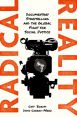
Radical Reality (2025)
Documentary Storytelling and the Global Fight for Social Justice
by Caty Borum and David Conrad-Pérez
Subject: Sociology
 Back
Back

