


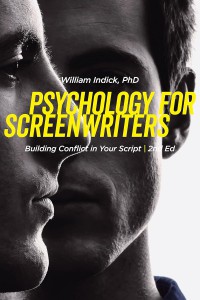
Psychology for Screenwriters
Building Conflict in Your Script


 (0 vote)
Moyenne des votes :
| 0 | vote |  = On peut s'en passer |
| 0 | vote |  = Bon livre |
| 0 | vote |  = Excellent livre |
| 0 | vote |  = Unique / une référence |
Votre vote : -
Description de l'ouvrage:
People’s lives are made up of good and bad decisions, histories filled with triumph and pain, behaviors formed from a lifetime of experiences — your characters should be no different. But writing psychologically complex characters requires an understanding of human behavior. Fortunately, you don’t need a PhD in psychology to add complexity to your screenwriting. William Indick will help you add psychological depth to your script with insights from brilliant psychological theorists like Freud, Jung, and Adler. Get ready to create characters and conflict that will have your audience begging for only one thing — more.
À propos de l'auteur :
William Indick earned his bachelors degree in psychology (1993) and masters degree in music therapy (1996) from New York University. After working as a special education teacher and as a creative arts therapist, he earned his Ph.D. in developmental psychology (2001) from Cornell University. Dr. Indick is an active screenwriter, author, screenwriting consultant, and an Associate Professor of Psychology at William Paterson University in Wayne, New Jersey, where he writes books and teaches courses in the area of media psychology and psychology in film. His other books include Media Environments and Mental Disorder (2021), The Digital God (2015), Ancient Symbology in Fantasy Literature (2012), The Psychology of the Western (2008), Psycho Thrillers (2006), and Movies and the Mind (2004).You may contact Dr. Indick through his webpage at: https://www.linkedin.com/in/william-indick-12b8b5125/
Voir le site internet de l'éditeur Michael Wiese Productions
> Du même auteur :
The Psychology of the Western (2008)
How the American Psyche Plays Out on Screen
Psycho Thrillers (2006)
Cinematic Explorations of the Mysteries of the Mind
> Sur un thème proche :
The Science of Screenwriting (2018)
The Neuroscience Behind Storytelling Strategies
de Paul Joseph Gulino et Connie Shears
Sujet : Technique > Scriptwriting
The Heart of Your Script (2026)
The Insider's Guide to Writing the Difficult Middle Section of a Screenplay
de Ted Wilkes et Phil Hughes
Sujet : Technique > Scriptwriting
Games Directors Play (2026)
Tricks and Stratagems of Cinematic Storytelling
Sujet : Technique > Scriptwriting
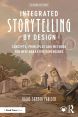
Integrated Storytelling by Design (2026)
Concepts, Principles and Methods for New Narrative Dimensions
Sujet : Technique > Scriptwriting

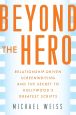
Beyond the Hero (2026)
Relationship-Driven Screenwriting and the Secret to Hollywood's Greatest Scripts
Sujet : Technique > Scriptwriting
Rem Koolhaas as Scriptwriter (2025)
OMA Architecture Script for West Berlin
Sujet : Technique > Scriptwriting
 Retour


