

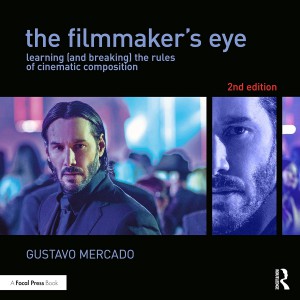
The Filmmaker's Eye
Learning (and Breaking) the Rules of Cinematic Composition


 (0 vote)
Average rating:
| 0 | rating |  = We can do without = We can do without |
| 0 | rating |  = Good book = Good book |
| 0 | rating |  = Excellent book = Excellent book |
| 0 | rating |  = Unique / a reference = Unique / a reference |
Your rating: -
Book Presentation:
This fully revised and updated edition of the classic book on cinematic composition provides readers with the necessary skills and technical know-how to create polished and narratively eloquent images, using a unique approach that combines an analytical, technical, and aesthetic understanding of the essential visual grammar of the shot.
Containing well over a hundred full-color case studies, this second edition was expanded to include brand-new shot types, and was completely updated to reflect developments in filmmaking technology and practices, including the DSLR revolution, the advent of mirrorless and compact cinema cameras, improvements in CMOS sensor performance, the introduction of 4K and higher video resolutions, and drone cinematography.
The Filmmaker's Eye: Learning (and Breaking) the Rules of Cinematic Composition 2nd edition is essential reading for anyone with an interest in motion media and cinematic storytelling, including independent filmmakers, directors, producers, cinematographers, editors, as well as those studying filmmaking, media aesthetics, and film studies.
About the Author:
Gustavo Mercado is an award-winning independent filmmaker with well over a decade of experience as a writer, director, and cinematographer of narrative films. The first edition of The Filmmaker’s Eye: Learning (and Breaking) the Rules of Cinematic Composition, was translated into French, Spanish, Chinese, Polish, Turkish, Portuguese, Japanese, and Korean, and is being used by film programs at colleges and universities worldwide. His second title in the Filmmaker's Eye film book series, The Language of the Lens: The Power of Lenses and The Expressive Cinematic Image was translated into Turkish, Spanish, Chinese, Japanese, Korean, and Ukranian. He teaches cinematography, editing, screenwriting, and film production at Hunter College’s Film & Media Studies Department in New York City.
Press Reviews:
"Mercado's book is a great resource for aspiring cinematographers. Using a brilliant selection of images, both classic and contemporary, he eloquently analyzes the conception and execution of a shot. Most important, he manages to explain how to achieve an aesthetically beautiful image, while giving equal weight to the powerful role of cinematography in portraying the characters and telling the story."
Florian Ballhaus, ASC, cinematographer of Flightplan, The Devil Wears Prada, and The Divergent Series: Insurgent
"Gustavo's book explores and details the techniques available with excellent examples of what works, why it works and how one can break with conventions for specific effect. A great resource for all, from students of the filmmaking craft through to seasoned practitioners intersted in contemplating their own instincts and why they do things the way they do."
Denson Baker, ACS, NZCS, cinematographer of The Dark Horse, Ophelia and The Luminaries
See the publisher website: Routledge
> Books with the same or similar title:
The Filmmaker's Eye (2019)
The Language of the Lens: The Power of Lenses and the Expressive Cinematic Image
Subject: Technique > Cinematography
> From the same author:
Voice & Vision (2025)
A Creative Approach to Narrative Filmmaking
by Mick Hurbis-Cherrier and Gustavo Mercado
Subject: Technique > All techniques
The Filmmaker's Eye (2019)
The Language of the Lens: The Power of Lenses and the Expressive Cinematic Image
Subject: Technique > Cinematography
> On a related topic:
Exposing the Film Apparatus (2025)
Global Laboratory Perspectives
Dir. Giovanna Fossati and Annie van den Oever
Subject: Technique > Cinematography
Introduction to Cinematography (2024)
Learning Through Practice
by Tania Hoser
Subject: Technique > Cinematography
Cinematography (2021)
Theory and Practice: For Cinematographers and Directors
by Blain Brown
Subject: Technique > Cinematography
Exposing the Film Apparatus (2016)
The Film Archive as a Research Laboratory
Dir. Giovanna Fossati and Annie van den Oever
Subject: Technique > Cinematography
Mastering MultiCamera Techniques (2010)
From Preproduction to Editing and Deliverables
Subject: Technique > Cinematography
 Back
Back

