

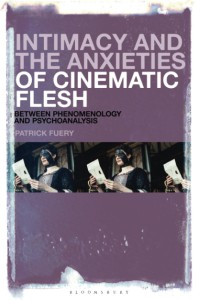
Intimacy and the Anxieties of Cinematic Flesh
Between Phenomenology and Psychoanalysis


 (0 vote)
Average rating:
| 0 | rating |  = We can do without = We can do without |
| 0 | rating |  = Good book = Good book |
| 0 | rating |  = Excellent book = Excellent book |
| 0 | rating |  = Unique / a reference = Unique / a reference |
Your rating: -
Book Presentation:
In a "return" to Edmund Husserl and Sigmund Freud, Intimacy and the Anxieties of Cinematic Flesh explores how we can engage these foundational thinkers of phenomenology and psychoanalysis in an original approach to film. The idea of the intimate spectator caught up in anxiety is developed to investigate a range of topics central to these critical approaches and cinema, including: flesh as a disruptive state formed in the relationships of intimacy and anxiety; time and the formation of cinema’s enduring objects; space and things; the sensual, the "real" and the unconscious; wildness, disruption, and resistance; and the nightmare, reading "phantasy" across the critical fields. Along with Husserl and Freud, other key thinkers discussed include Edith Stein, Roman Ingarden, Maurice Merleau-Ponty, Mikel Dufrenne in phenomenology; Melanie Klein, Ernest Jones, Julia Kristeva, and Rosine Lefort in psychoanalysis. Framing these issues and critical approaches is the question: how might Husserlian phenomenology and Freudian/Lacanian psychoanalysis, so often seen as contradistinctive, be explored through their potential commonalities rather than differences? In addressing such a question, this book postulates a new approach to film through this phenomenological/psychoanalytic reconceptualization. A wide range of films are examined not simply as exemplars, but to test the idea that cinema itself can be a version of critical thinking.
About the Author:
Patrick Fuery is Professor at Chapman University, USA. His research interests include psychoanalysis, semiotics, literary and cultural theory, gender studies, film and visual studies, medicine and the arts. Fuery is the author of 8 books, including Madness and Cinema (2004), New Developments in Film Theory (2000), and The Theory of Absence (1995).
Press Reviews:
"The book offers a rare combination of phenomenology and psychoanalysis in describing what we do when view a film. The viewer emerges as the anxiously intimate spectator without whose responses cinema could not exist. Interweaving his theorization with a rich offering of film analyses, the author is inviting us to test our own cinematic experience against the book's interpretations." ―Horst Ruthrof, Emeritus Professor FAHA FICI, Murdoch University, Australia
"In this scintillating work, Patrick Fuery argues that film creates a new ego and cinema becomes not simply a different art form but an entirely new way of being, experiencing, and knowing. The cinema ego is sensuous and sentient. It creates new object relations and invites different terms - "the projected familiar," "introjected defamiliarization" that open different intellectual and emotional vistas. "To be a film spectator," he writes, "is to take up an othered consciousness," and this brave and brilliant book provides its readers with the conceptual tools to engage this new otherness. A work for all of us to read." ―Christopher Bollas, , Psychoanalyst and Independent Scholar, USA
"An extraordinary book and compulsory reading for all those interested in the visual history of the human body." ―Javier Moscoso, Research Professor of History and Philosophy of Science, Institute of Philosophy of the Spanish National Research Council (CSIC), Spain, and author of Pain: A Cultural History (2012)
> On a related topic:
The Structures of the Film Experience by Jean-Pierre Meunier (2019)
Historical Assessments and Phenomenological Expansions
Dir. Julian Hanich and Daniel Fairfax
Subject: Film Analysis
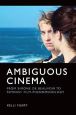
Ambiguous Cinema (2024)
From Simone de Beauvoir to Feminist Film-Phenomenology
by Kelli Fuery
Subject: Sociology
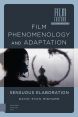

Phenomenology of Film (2017)
A Heideggerian Account of the Film Experience
by Shawn Loht
Subject: Theory
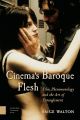
Cinema's Baroque Flesh (2016)
Film, phenomenology and the art of entanglement
by Saige Walton
Subject: Theory
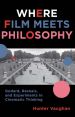
Where Film Meets Philosophy (2013)
Godard, Resnais, and Experiments in Cinematic Thinking
Subject: History of Cinema
 Back
Back

