


The Oxford Handbook of Queer Cinema
Sous la direction de Ronald Gregg et Amy Villarejo

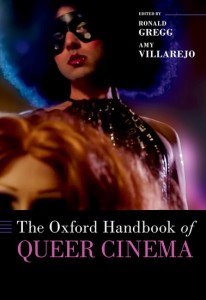

 (0 vote)
Moyenne des votes :
| 0 | vote |  = On peut s'en passer = On peut s'en passer |
| 0 | vote |  = Bon livre = Bon livre |
| 0 | vote |  = Excellent livre = Excellent livre |
| 0 | vote |  = Unique / une référence = Unique / une référence |
Votre vote : -
Description de l'ouvrage:
• Challenges and expands the queer canon
• Covers the silent film era through the present day
• Highlights non-Western media in particular, in both diasporic and national contexts
The term "queer cinema" is often used to name at least three cultural events: 1) an emergent visual culture that boldly identifies as queer; 2) a body of narrative, documentary, and experimental work previously collated under the rubric of homosexual or lesbian, gay, bisexual, and trans (LGBT) cinema; 3) a means of critically reading and evaluating films and other visual media through the lens of sexuality. By this expansive account, queer cinema encompasses more than a century of filmmaking, film criticism, and film reception, and the past twenty-five years have seen the idea of "queer cinema" expand further as a descriptor for a global arts practice. As the first of its kind, The Oxford Handbook of Queer Cinema treats these three currents as art and critical practice, bringing the canon of queer cinema together with a new generation of makers and scholars.
The Handbook's contributors include scholars who research the worldwide canon of queer cinema, those who are uniquely positioned to address three decades of its particular importance, and those best positioned to ponder the forms it is taking or may take in our new century, namely digital media that moves in new circuits. In eight sections, they explore the many forms that queer cinema takes across time, discussing narrative, experimental, documentary, and genre filmmaking, including pornography. Likewise, although the study of cinema and media is not restricted to a single method, chapters showcase the unique combination of textual analysis, industrial and production history, interpretation, ethnography, and archival research that this field enables. For example, chapters analyze the ways in which queer cinema both is and is not self-evidently an object for study by examining films that reinforce negative understandings of queerness alongside those that liberate the subject; and by naming the films that are newly queered, while noting that many queerly-made texts await discovery. Finally, chapters necessarily assert that queer cinema is not an Anglophone phenomenon, nor is it restricted to the medium of film.
À propos des auteurs :
Edited by Ronald Gregg, Senior Lecturer in Film, Columbia University, and Amy Villarejo, Professor of Film, University of California, Los Angeles Ronald Gregg writes and teaches about queer cinema, classical and contemporary Hollywood, and the impact of globalization and digital technology on recent Hollywood film. He co-edited the Spring 2020 issue of Framework: The Journal of Cinema and Media focused on "Pleasures and Dangers in Adapting and Appropriating Hegemonic Sources." He has also curated film and video programming for Columbia's Film Program, Yale's Whitney Humanities Center, the Chicago Gay and Lesbian Film Festival, the San Francisco International LGBT Film Festival, the South African Gay and Lesbian Film Festival, and the University of Chicago Lesbian and Gay Studies Project. Amy Villarejo was the Fredric J. Whiton Professor of Humanities at Cornell University, where she taught for many years in the Departments of Performing and Media Arts and Comparative Literature. In 2020, she joined the faculty at UCLA in the renowned School of Theater, Film & Television. She is currently working on a monograph entitled Talking Heads, about televisual authority from the 1980s to the present.
> Des mêmes auteurs :
Film Studies (2015)
A Global Introduction
de Glyn Davis, Kay Dickinson, Lisa Patti et Amy Villarejo
Sujet : Film Analysis


Keyframes (2001)
Popular Cinema and Cultural Studies
Dir. Matthew Tinkcom et Amy Villarejo
Sujet : Countries > United States

> Sur un thème proche :
Nothing Censored, Nothing Gained (2025)
Obscenity Law and Histories of Queer Distribution and Exhibition
Sujet : Sociology
Taking Back Desire (2025)
A Psychoanalytic Approach to Queerness and Neoliberalism on Screen
Sujet : Sociology
The New Queer Gothic (2024)
Reading Queer Girls and Women in Contemporary Fiction and Film
de Robyn Ollett
Sujet : Sociology
Hollywood Pride (2024)
A Celebration of LGBTQ+ Representation and Perseverance in Film
Sujet : Sociology
Corpses, Fools and Monsters (2024)
The History and Future of Transness in Cinema
de Willow Maclay et Caden Gardner
Sujet : Sociology
Queer and Femme Gazes in AfroAsian American Visual Culture (2024)
Dir. Rebecca Kumar et Seulghee Lee
Sujet : Sociology
Gay Conversion Practices in Memoir, Film and Fiction (2024)
Stories of Repentance and Defiance
Dir. James E. Bennett et Marguerite Johnson
Sujet : Sociology
 Retour

