


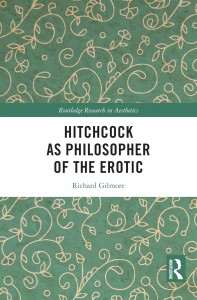
Hitchcock as Philosopher of the Erotic


 (0 vote)
Average rating:
| 0 | rating |  = We can do without = We can do without |
| 0 | rating |  = Good book = Good book |
| 0 | rating |  = Excellent book = Excellent book |
| 0 | rating |  = Unique / a reference = Unique / a reference |
Your rating: -
Book Presentation:
This book reads Alfred Hitchcock as a philosopher of what constitutes the erotic. The author argues that Hitchcock is doing a post-Nietzschean, postmodern kind of philosophy in which he is exploring and creating possibilities of what the erotic can feel like and how the erotic can be expressed.
The erotic is a pervasive phenomenon in Hitchcock’s films. It involves irony, play, and sophistication, and there can be erotic failures as well as erotic successes. The erotic is most complexly explored by Hitchcock in his two masterpieces from the 1950s: Vertigo (1958), a story of the failure of the erotic, and North by Northwest (1959), in which the erotic is consummated in marriage. The author argues that Hitchcock has a philosophical theory about what makes the difference. It is a version of existential philosophy that understands what a person is to be based on what they make of themselves through their choices. The author argues that the erotic for Hitchcock is a process of mutual, reciprocal creation of the personality of the other person. This process is complicated by the fact that as one attempts to create the person one desires, one is simultaneously being created by that other person, and so what one desires is also in a process of being recreated in the mutual reciprocal dance of the erotic entanglement. There is a moral dimension to this because erotic failure is, in a way, a failure of the human, not in the sense of a human essence, but in the sense of realizing human possibilities that can make our lives more satisfying, complete, and full.
Hitchcock as Philosopher of the Erotic will appeal to scholars and advanced students working on philosophy of film, film studies, and philosophy of love and sex.
About the Author:
Richard Gilmore is Professor of Philosophy at Concordia College, Moorhead, MN. He is the author of Emerson as Philosopher: Postmodernism and Beyond (2023), Searching for Wisdom in Movies: From the Book of Job to Sublime Conversations (2016), and Philosophical Health: Wittgenstein’s Method in Philosophical Investigations (1999).
See the publisher website: Routledge
See the complete filmography of Alfred Hitchcock on the website: IMDB ...
> From the same author:
> On a related topic:

Traversing the Fantasy (2021)
The Dialectic of Desire/Fantasy and the Ethics of Narrative Cinema
by Sandra Meiri and Odeya Kohen-Raz
Subject: Theory
Psycho-Sexual (2013)
Male Desire in Hitchcock, De Palma, Scorsese, and Friedkin
by David Greven
Subject: Sociology
Acting and performance in Hitchcock (2026)
Dir. Adrian Garvey and Victoria Lowe
Subject: Director > Alfred Hitchcock
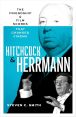
Hitchcock and Herrmann (2025)
The Friendship and Film Scores that Changed Cinema
Subject: Director > Alfred Hitchcock
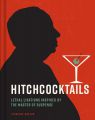
Hitchcocktails (2025)
Lethal Libations Inspired by the Master of Suspense
Subject: Director > Alfred Hitchcock
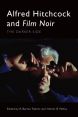
Alfred Hitchcock and Film Noir (2024)
The Darker Side
Dir. R. Barton Palmer and Homer B. Pettey
Subject: Director > Alfred Hitchcock
 Back
Back

