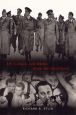


Refractions of the Third Reich in German and Austrian Fiction and Film
de Chloe Paver



 (0 vote)
Moyenne des votes :
| 0 | vote |  = On peut s'en passer = On peut s'en passer |
| 0 | vote |  = Bon livre = Bon livre |
| 0 | vote |  = Excellent livre = Excellent livre |
| 0 | vote |  = Unique / une référence = Unique / une référence |
Votre vote : -
Description de l'ouvrage:
• Makes a new contribution to a well-established field of study
• Surveys and problematizes critical approaches to the subject
• Covers a wide range of genres and forms
Six decades after the defeat of National Socialism, commemoration and mourning are ongoing, open-ended projects in Germany and Austria, and continue to generate a steady stream of literature and film about the Nazi past that, while comparatively modest in volume, is often disproportionately influential in public debates. At the same time, new museums and memorials are being established all the time in what Andreas Huyssen has called a 'memory boom', while what is remembered and how it is remembered is subject to continuous change. Scholars have to keep pace with each new development in this culture of commemoration. Rather than add to the growing body of surveys of literature and film about the Third Reich, this study instead puts scholars' critical approaches under the microscope. Chloe Paver considers how far the object of the study is not just analysed but also constructed by the scholar's approach and identifies the criteria by which academics judge the values of works that deal with the Third Reich.
This book brings aspects of film, fiction, and memorial culture together in a single study that pays as much attention to images (and in the case of film to sound) as it does to text. The study of film, historical exhibitions, and sites of memory also demands consideration of social contexts and practices. A case study of memory at two of Austria's sites of terror demonstrates the methods used in the study of memorials and museums and considers the ways in which memory attaches itself to place.
À propos de l'auteur :
Chloe Paver, Senior Lecturer in German, University of Exeter
Revue de Presse:
"...both wide-ranging and very specific...considered, probing and very self-reflexive" - Forum of Modern Language Studies
"...perceptive study...a thought-provoking introduction to the critical issues of contemprary 'Gedächtniskultur'." - Ben Hutchinson MLR
> Sur un thème proche :
Cinematically Transmitted Disease (2024)
Eugenics and Film in Weimar and Nazi Germany



Dietrich & Riefenstahl (2016)
Hollywood, Berlin, and a Century in Two Lives

The Nazi Past in Contemporary German Film (2014)
Viewing Experiences of Intimacy and Immersion
de Axel Bangert

Hitler's Heroines (2003)
Stardom & Womanhood In Nazi Cinema

The Dark Mirror (2002)
German Cinema Between Hitler and Hollywood
 Retour