

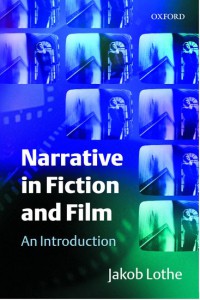
Narrative in Fiction and Film
An Introduction
by Jakob Lothe


 (0 vote)
Average rating:
| 0 | rating |  = We can do without = We can do without |
| 0 | rating |  = Good book = Good book |
| 0 | rating |  = Excellent book = Excellent book |
| 0 | rating |  = Unique / a reference = Unique / a reference |
Your rating: -
Book Presentation:
• Offers a comprehensive and accessible introduction to narrative theory
• Introduces students to the key concepts of narrative theory
• Theories introduced are illustrated and tested with examples from key texts (and the film versions of these texts)
• Will be a useful text across a wide range of introductory literature and media studies courses
• Presents complex concepts in a very straightforward manner with attentiveness to the needs of the inexperienced reader
Narrative in Fiction and Film gives a clear presentation of key concepts of narrative theory. A growing field in the humanities, narrative theory (or 'narratology') studies such narratives, thus discussing central questions concerning human communication.
This introductory book has a two-part structure: Part I presents key concepts of narrative theory - for example, author, narrator, time, perspective, event, characterization. The discussion is oriented towards narrative fiction and centred on literary texts, yet since film can also have an important narrative dimension, the film aspect is brought into each chapter.
Part II analyses five prose texts: the parable of the sower in St. Mark's Gospel, Franz Kafka's The Trial, James Joyce's 'The Dead', Joseph Conrad's Heart of Darkness, and Virginia Woolf's To the Lighthouse. Part II also discusses film versions of four of these texts: Orson Welles's The Trial, John Huston's The Dead, Francis Ford Coppola's Apocalypse Now, and Colin Gregg's To the Lighthouse.
The book brings together and lucidly presents concepts and theories in narrative theory, and illustrates and tests theses theories. It will be an invaluable text for undergraduates studying narrative theory as part of a literature or film studies course.
About the Author:
Jakob Lothe, Professor of English Literature, University of Oslo
Press Reviews:
'This is a valuable book, not least because of its inter-disciplinary nature; but it will be considered somewhat specialist by most students of film. Its focus on narrative and what this can mean in the broadest sense make it possible to see it as a useful tool within the expanding area of creative writing as an undergraduate discipline, particularly when students are asked to theorise their own narrative strategies or to experiment with different forms of narrative.' THES May 2000 -
> On a related topic:
I Know That You Know That I Know (2020)
Narrating Subjects from Moll Flanders to Marnie
by George Butte
Subject: Film Analysis
Perturbatory Narration in Film (2017)
Narratological Studies on Deception, Paradox and Empuzzlement
Dir. Sabine Schlickers and Vera Toro
Subject: Film Analysis
 Back
Back

