


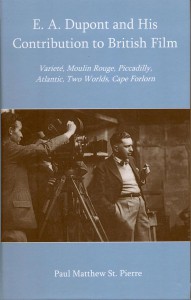
E. A. Dupont and His Contribution to British Film


 (0 vote)
Average rating:
| 0 | rating |  = We can do without = We can do without |
| 0 | rating |  = Good book = Good book |
| 0 | rating |  = Excellent book = Excellent book |
| 0 | rating |  = Unique / a reference = Unique / a reference |
Your rating: -
Book Presentation:
This book discusses the life and career of German Jewish filmmaker Ewald Andre Dupont (1861-1956), as a journalist, screen writer, and director in Berlin, 1913-25, 1931-33, a director at British International Pictures, 1926-31, and a B-movie director in Hollywood, 1925-26, 1933-56. Having apprenticed with Alfred Hitchcock, F. W. Murnau, Ernst Lubitsch, and Fritz Lang in Berlin, where he distinguished himself with Das alte Gesetz (1923) and Variete (1925), Dupont launched his career at 'the British Hollywood' of British International Pictures, where he contributed to the studio's international style, experimented with emergent sound technologies, made the world's first multilingual sound pictures, and, in the most creative phase of his career, directed the feature films Moulin Rouge (1928), Piccadilly (1929), Atlantic (1930), Two Worlds (1931), and Cape Forlorn (1931), which along with Variete, provide the focus of this academic study.
About the Author:
Paul Matthew St. Pierre is associate professor of English at Simon Fraser University.
Press Reviews:
St. Pierre (English, Simon Fraser U., British Columbia) recounts the life and career of German filmmaker Dupont (1891-1956), emphasizing the impact on British film of his work in Germany, Hollywood, and Britain. Stringing the biography from movie to move, he discusses such topics as /> as a precursor of his British Expressionism; , Anna May Wong, and the expressive blue light; , the pogrom, and Dupont's Jewish subjectivity; and the lighthouse invited the female antihero in . ― Book News, Inc.
See the publisher website: Fairleigh Dickinson University Press
See the complete filmography of Ewald André Dupont on the website: IMDB ...
> From the same author:
Cinematography of Carl Theodor Dreyer (2018)
Performative Camerawork, Transgressing the Frame
Subject: Director > Carl Theodor Dreyer
Cinematography in the Weimar Republic (2018)
Lola Lola, Dirty Singles, and the Men Who Shot Them
Music Hall Mimesis in British Film, 1895-1960 (2009)
On the Halls on the Screen
Subject: Countries > Great Britain
> On a related topic:
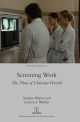
Screening Work (2024)
The Films of Christian Petzold
by Stephan Hilpert and Andrew J. Webber
Subject: Director > Christian Petzold

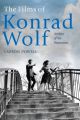
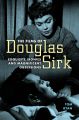
The Films of Douglas Sirk (2019)
Exquisite Ironies and Magnificent Obsessions
by Tom Ryan
Subject: Director > Douglas Sirk

Fatih Akin's Cinema and the New Sound of Europe (2019)
Subject: Director > Fatih Akin
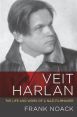
Veit Harlan (2016)
The Life and Work of a Nazi Filmmaker
by Frank Noack
Subject: Director > Veit Harlan
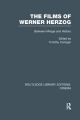
The Films of Werner Herzog (2016)
Between Mirage and History
Dir. Timothy Corrigan
Subject: Director > Werner Herzog
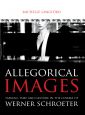
Allegorical Images (2006)
Tableau, Time and Gesture in the Cinema of Werner Schroeter
Subject: Director > Werner Schroeter
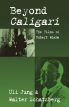
Beyond Caligari (1999)
The Films of Robert Wiene
by Uli Jung and Walter Schatzberg
Subject: Director > Robert Wiene

 Back
Back

