


Young Soviet Film Makers

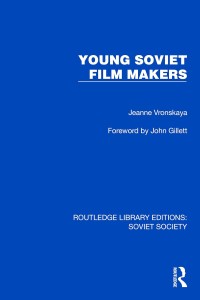

 (0 vote)
Average rating:
| 0 | rating |  = We can do without = We can do without |
| 0 | rating |  = Good book = Good book |
| 0 | rating |  = Excellent book = Excellent book |
| 0 | rating |  = Unique / a reference = Unique / a reference |
Your rating: -
Book Presentation:
Based on theatrical research of unusual depth and enterprise, Theatre as a Weapon (1986) shows how the workers’ theatre of the 1920s and 1930s transformed the social function of theatre. Drawing largely on unpublished sources, it provides lively case studies of workers’ theatre in the USSR, Germany and the United Kingdom. They range from the Russian mass spectacles in front of the Winter Palace, through the thousands of factory and courtyard performances in Germany, to the May Day activities of the Workers’ Theatre Movement all over Britain. The authors worked for many years in political theatre in Britain, Austria and Germany, and they draw on their wide experience to focus on both major theoretical controversies and their practical ramifications. They show how workers’ theatre became an instrument, a weapon, for political change, helping to raise the consciousness of thousands of workers and encouraging them to take action. They describe how worker-actors, musicians, writers and directors formed small, flexible troupes which contributed locally to the day-to-day struggles of their class, while at the same time participating in national and international political campaigns. Developments in dramatic structure are analysed, from the simple review form to the more complex scene-and-song montage. Placing the work of Meyerhold, Eisenstein, Piscator, Brecht and Eisler in this context, the authors demonstrate how the montage principle became the significant factor in the political theatre of this period. The book is illustrated with rare photographs which reflect the atmosphere of those mass movements. Unique in its coverage, Theatre as a Weapon is above all an analysis of how the mirror of realistic theatre was transformed into a dynamic weapon for social change. It fills an important gap in the history of working-class culture.
About the Author:
Jeanne Vronskaya, Russian-born and based in England, was a well-known writer on the cinema.
Press Reviews:
‘Theatre as a Weapon matches the best analytical work in other languages, and is unique in the scope of its coverage. Both theatrically and politically, it is authoritative in its information and trenchant in its analysis.’ – Dr Edward Braun, University of Bristol
See the publisher website: Routledge
> On a related topic:
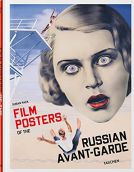
Film Posters of the Russian Avant-Garde (2021)
by Susan Pack
(in English, French and German)
Subject: Countries > Russia / USSR

Socialist Senses (2017)
Film, Feeling, and the Soviet Subject, 1917–1940
by Emma Widdis
Subject: Countries > Russia / USSR
Visions of a New Land (2012)
Soviet Film from the Revolution to the Second World War
by Emma Widdis
Subject: Countries > Russia / USSR
From Victimhood to Empowerment (2025)
Representing Women in 1920s Soviet Georgian Cinema
Subject: Countries > Russia / USSR
The Men with the Movie Camera (2016)
The Poetics of Visual Style in Soviet Avant-Garde Cinema of the 1920s
Subject: Countries > Russia / USSR

The Power of Pictures (2015)
Early Soviet Photography, Early Soviet Film
by Susan Tumarkin Goodman and Jens Hoffmann
Subject: Countries > Russia / USSR
The Voice of Technology (2018)
Soviet Cinema's Transition to Sound, 1928–1935
Subject: History of Cinema
Transpacific Convergences (2022)
Race, Migration, and Japanese American Film Culture before World War II
by Denise Khor
Subject: Countries > United States
 Back
Back

