


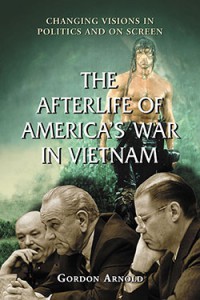
The Afterlife of America's War in Vietnam
Changing Visions in Politics and on Screen


 (0 vote)
Average rating:
| 0 | rating |  = We can do without = We can do without |
| 0 | rating |  = Good book = Good book |
| 0 | rating |  = Excellent book = Excellent book |
| 0 | rating |  = Unique / a reference = Unique / a reference |
Your rating: -
Book Presentation:
The fall of Saigon in 1975 signaled the end of America’s longest war. Yet in many ways the conflict was far from over. Although the actual fighting ended, the struggle to find political justification and historical vindication for the Vietnam War still lingered in American consciousness. A plethora of images from America’s first “televised war” has kept the conflict all too fresh in the memories of those who lived through it, while creating a confusing picture for a younger generation. The political process of attaching meaning to historical events has ultimately failed due to the lack of consensus—then and now—regarding events surrounding the Vietnam War.
Reviewing the record of American politics, film, and television, this volume provides a brief overview of the war’s appearance in American popular culture. It examines the ways in which this conflict has consistently resurfaced in social and political life, especially in the arena of contemporary world events such as the Soviet incursion into Afghanistan, the Gulf War and the 2004 presidential campaign. To this end, the work explores the contexts and uses of the Vietnam War as a recurring subject. The circumstances and symbolism used in the rhetoric of the political elite and the news media, including the New York Times, the Washington Post, Time, and Newsweek, are discussed. Emphasis is also placed on the role of film and television as the book examines movies such as The Deer Hunter and Apocalypse Now and TV series such as M*A*S*H. In weaving together the political and screen appearances of the Vietnam War, the book reexamines the influence of a major episode in American history.
About the Author:
Gordon Arnold is Professor of Liberal Arts at Montserrat College of Art in Beverly, Massachusetts. He lives in the Boston area.
> From the same author:
21st Century Kaiju (2023)
The Resurgence of Giant Monster Movies
> On a related topic:
Women and New Hollywood (2023)
Gender, Creative Labor, and 1970s American Cinema
Dir. Aaron Hunter and Martha Shearer
Subject: Countries > United States
The Other Hollywood Renaissance (2020)
Dir. Dominic Lennard, R. Barton Palmer and Murray Pomerance
Subject: Countries > United States
Welcome to Fear City (2019)
Crime Film, Crisis, and the Urban Imagination
Subject: Countries > United States
Liberating Hollywood (2018)
Women Directors and the Feminist Reform of 1970s American Cinema
Subject: Countries > United States
The New Hollywood (2006)
From Bonnie and Clyde to Star Wars
by Peter Kramer
Subject: Countries > United States
The Last Great American Picture Show (2004)
New Hollywood Cinema in the 1970s
Dir. Thomas Elsaesser, Noel King and Alexander Horwath
Subject: Countries > United States
Specters of War (2012)
Hollywood's Engagement with Military Conflict
Policing Show Business (2024)
J. Edgar Hoover, the Hollywood Blacklist, and Cold War Movies
Subject: Countries > United States
 Back
Back

