


American Militarism and Anti-Militarism in Popular Media, 1945–1970



 (0 vote)
Moyenne des votes :
| 0 | vote |  = On peut s'en passer = On peut s'en passer |
| 0 | vote |  = Bon livre = Bon livre |
| 0 | vote |  = Excellent livre = Excellent livre |
| 0 | vote |  = Unique / une référence = Unique / une référence |
Votre vote : -
Description de l'ouvrage:
Scholars have characterized the early decades of the Cold War as an era of rising militarism in the United States but most Americans continued to identify themselves as fundamentally anti-militaristic. To them, “militaristic” defined the authoritarian regimes of Germany and Japan that the nation had defeated in World War II—aggressive, power-hungry countries in which the military possessed power outside civilian authority.
Much of the popular culture in the decades following World War II reflected and reinforced a more pacifist perception of America. This study explores military images in television, film, and comic books from 1945 to 1970 to understand how popular culture made it possible for a public to embrace more militaristic national security policies yet continue to perceive themselves as deeply anti-militaristic.
À propos de l'auteur :
Lisa M. Mundey is an American and military historian who has worked both in academia and U.S. Army history. She has written extensively on U.S. operations in Afghanistan.
> Sur un thème proche :

Images of Unrest (2026)
Documentary Film and Political Violence
de Nikolaj Lübecker et Daniele Rugo
Sujet : Sociology

Kinotopias (2026)
Film, Place and Belonging in a Bordered World
de Kevin Smets, Lennart Soberon, Irene Gutiérrez-Torres et Silvia Almenara-Niebla
Sujet : Sociology

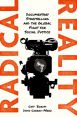
Radical Reality (2025)
Documentary Storytelling and the Global Fight for Social Justice
de Caty Borum et David Conrad-Pérez
Sujet : Sociology




The Anti-Enlightenment in Popular Culture (2024)
Greed, Hate, Star Wars, and Star Trek
Sujet : Sociology
Taking Measures (2023)
Usages of Formats in Film and Video Art
Dir. Fabienne Liptay et Carla Gabrí
Sujet : Sociology
 Retour